2 Corinthians 9:6-7 "6 Now this I say, he who sows sparingly will also reap sparingly, and he who sows bountifully will also reap bountifully. 7 Each one must do just as he has purposed in his heart, not grudgingly or under compulsion, for God loves a cheerful giver."
This shows where some Churches heart, especially the larger ones, really is at. Tithing is unBiblical, it's Old Testament and did you EVER hear Jesus or any of the Apostles talk about the need to tithe in the New Testament (this dispensation)?
This doesn't mean we are not to give to the Church, see 2 Corinthians 9 verse above. We are to support ministries which teach truth (unlike this one in the video above). Our own personal giving multiplied exponentially when we started to learn this, because the Holy Spirit put it in our hearts and the Lord made it possible!
Pimp Preachers like these can be researched on the site www.pulpit-pimps.org, be a Berean and read and know God's word so you may discern the lies most pulpits preach today!

Thursday, August 11, 2011

Tuesday, August 2, 2011
Psalm 22
Psalms 22-24 are called the Shepherd Psalms, and 22 particularly is interesting. In it David describes crucifixion hundreds of years before it was even invented as a form of torture by the Persians. Ps. 22 starts with Jesus' first words from the cross (22:1 "My God, my God, why have You forsaken me?" (Matthew 27:48 and Mark 15:34 record this) and ends with His last words on the cross (John 19:30) in the Greek Septuagint of the OT "Tetelestai". It's one word in the Greek meaning "it is finished". In Jesus' day Tetelestai was stamped on bills "paid in full"....as our sins were paid in full when Jesus gave Himself up on the cross for them.
In researching this I found this wonderful page: http://www.messianicart.com/chazak/yeshua/psalm22.htm (contents copied below for your convenience, but check out the website for lots more)
The twenty-second psalm continues to ignite controversy, in the dialogues between Christians and Jews, concerning the messiahship of Yeshua of Nazareth. The crux of this dispute reaches critical mass in verse 17 (16 in Christian editions), which many Christians translate, "They have pierced my hands and my feet." Jewish translations adhere to the majority reading within the family of the Masoretic text, "like a lion are my hands and feet." In the midst of the fierce clash, it is indisputable that this psalm, whether reading from the Christian or Jewish editions, bears remarkable similarities to the crucifixion of Yeshua of Nazareth, as depicted in the Gospels.
The Subject of Psalm 22
Of whom does Psalm 22 speak? The Rabbis apply psalm 22 to Esther, an interpretation which can be seen in Rabbinic literature such as the Bablyonian Talmud and the Midrash on Psalms. In the most literal, non-prophetic sense, the psalm most likely described David's confrontations with his enemies, and his desire for Adonai's help. In light of this, Rabbi Tovia Singer of Outreach Judaism, incorrectly states,
". . . missionaries are confronted with another remarkable problem as they seek to project the words of this Psalm into a first century crucifixion story. In the simplest terms, this text that Christians eagerly quote is not a prophecy, nor does it speak of any future event."1
First of all, this is not at all a "remarkable problem," as David's life was itself a prophetic picture of the coming Messiah, and an inspiration for the messianic prophecies he composed. Second, Singer's assumption that Psalm 22 "is not a prophecy," is fallacious. Rarely, if ever, does the Hebrew Bible explicitly identify passages as a prophetically "messianic". Regarding the messianic prophecies, you have to interpret them to evaluate their messianic status. Singer then correctly says,
All of the Gospels similarly [quote] Psalm 22:19 . . . in their crucifixion narratives, and Hebrews 2:12 quotes Psalm 22:21 to explain why the messiah had to suffer for humanity."2
Interestingly, there exists another piece of ancient literature that quotes this Psalm to support the concept of Messiah ben Yosef's suffering for humanity, but does not occur in Christian literature. It appears in a 9th century Jewish work, in which a remarkable interpretation materializes, explaining that the Messiah, named Ephraim, suffers for the sins of Israel, and of the world, when God makes an agreement with him to be vicariously afflicted for their sake. This amazing portrayal of the Messiah Ben Yosef's work, cites Psalm 22 as the foundational Scripture for the Messiah's atoning torment:
During the seven-year period preceding the coming of the son of David, iron beams will be brought low and loaded upon his neck until the Messiah's body is bent low. Then he will cry and weep, and his voice will rise to the very height of heaven, and he will say to God: Master of the universe, how much can my strength endure? How much can my spirit endure? How much my breath before it ceases? How much can my limbs suffer? Am I not flesh and blood?
It was because of the ordeal of the son of David that David wept, saying My strength is dried up like a potsherd (Ps. 22:16). During the ordeal of the son of David, the Holy One, blessed be He, will say to him: Ephraim, My true Messiah, long ago, ever since the six days of creation, thou didst take this ordeal upon thyself. At this moment, thy pain is like my pain . . .
At these words, the Messiah will reply: Now I am reconciled. The servant is content to be like his Master.
Pesikta Rabbati, Piska 36.2, translated by William G. Braude, Yale University Press, pg. 680-681
It is taught, moreover, that in the month of Nisan the Patriarchs will arise and say to the Messiah: Ephraim, our true Messiah, even though we are thy forbears, thou art greater that we because thou didst suffer for the iniquities of our children, and terrible ordeals befell thee . . . for the sake of Israel thou didst become a laughingstock and a derision among the nations of the earth; and didst sit in darkness, in thick darkness, and thine eyes saw no light, and thy skin cleaved to thy bones, and thy body was as dry as a piece of wood; and thine eyes grew dim from fasting, and thy strength was dried up like a potsherd - all these afflictions on account of the iniquities of our children . . .
Pesikta Rabbati 37.1, translated by William G. Braude, Yale University Press, pg. 685-686
Ephraim is a darling son to Me . . . My heart yearneth for him, in mercy I will have mercy upon him, saith the Lord (Jer. 31:20). Why does the verse speak twice of mercy: In mercy I will have mercy upon him? One mercy refers to the time when he will be shut up in prison, a time when the nations of the world will gnash their teeth at him every day, wink their eyes at one another in derision of him, nod their heads at him in contempt, open wide their lips to guffaw, as is said All they that see me laugh me to scorn; they shoot out the lip, they shake the head (Ps. 22:8); My strength is dried up like a potsherd; and my tongue cleaveth to my throat; and thou layest me in the dust of death (Ps. 22:16). Moreover, they will roar over him like lions, as is said They open wide their mouth against me, as a ravening and roaring lion. I am poured out like water, and all my bones are out of joint; my heart is become like wax; it is melted in mine inmost parts (Ps. 22:14-15).
Pesikta Rabbati 37.1, translated by William G. Braude, Yale University Press, pg. 686-687
Like a Lion or They Have Pierced?
In verse 16 (17) of this psalm, the minute difference of a centimeter of ink has ignited a firestorm of controversy. The majority reading of the Masoretic text literally reads, "Like a lion my hands and feet." This reading is difficult, and doesn't make sense. In the Septuagint (LXX), the text reads, "they have pierced my hands and my feet." The difference between the Hebrew letters vav and yud are extremely small, yet the change it makes is incredibly significant.

Because of this controversial reading, anti-missionaries have accused Christians of tampering with the text. This is a simple reaction to issues that are much more complex and difficult. G. Shapiro, an anti-missionary, says that, ". . . mistranslations prove only that the missionaries trying to convert you are deceptive."3 Then, however, Shapiro goes on to insert words into the text that are absent from the Hebrew: "like lions [they maul] my hands and feet."4 The words "they maul" are missing from the original text, which is why Shapiro has brackets around the words. Ironically, however, it is the Christians who are "deceptive" with their "mistranslations", but it is acceptable for the anti-missionary to add to Adonai's word. The question may be asked, "Why is it necessary to have to add to Adonai's word?" Indeed, sometimes adding minor words such as, "one, as, to", makes the ancient Hebrew flow better in modern English, but in this case, the words are completely foreign to the text, and are interpolated so this sentence will make sense. According to the Tanakh,
"Every word of Elohim is flawless; he is a shield to those who take refuge in him. Do not add to his words, or he will rebuke you and prove you a liar."
Proverbs 30:5-6, NIV
Rabbi Singer, probably the most prominent accuser of "deceptive mistranslations", also adds to the text with, "like a lion they are at my hands and my feet."5 He unashamedly writes,
". . . in an effort to distance Christians from a compelling Jewish message, the founders and defenders of Christianity methodically altered selected texts from the Jewish scriptures. This rewriting of the Tanach was not done arbitrarily or subtly. The church quite deliberately tampered with the words of the Jewish scriptures in order to bolster their most startling claim which is: The Old Testament foretold of no messiah other than Jesus of Nazareth. With this goal in mind, missionaries manipulated, misquoted, mistranslated and even fabricated verses in Tanach in order to make Jesus' life fit traditional Jewish messianic parameters and to make traditional Jewish fit the life of Jesus."6emphasis mine.
Rabbi Singer also utilizes the following words to describe the Christian translation of Psalm 22:16(17):
1. "Christian translators rewrote the words of King David
2. The insertion of the word "pierced" into the last clause of this verse is a not-too-ingenious Christian interpolation that was created by deliberately mistranslating the Hebrew word kaari () as "pierced". . .
3. "the phrase “they pierced my hands and my feet” is a Christian contrivance that appears nowhere in the Jewish scriptures."
4. ". . . this stunning mistranslation in the 22nd Psalm. . ."
5. "This verse was undoubtedly tampered with years after the Christian canon was completed."
6. "The Bible tampering. . ."
7. "Why then did [the Christian translators" specifically target Psalm 22 for such Bible tampering?"
8. "this church revision of the 22nd Psalm. . ."
9. "The church, therefore, did not hesitate to tamper with the words of the 22nd Psalm . . ."
10. " . . . the stunning mistranslation in this chapter. . ."7
Even in light of these SERIOUS allegations, Singer himself interpolates foreign words to the text of Psalm 22 with,
"Dogs have encompassed me.
A company of evildoers has enclosed me;
like a lion, they are at my hands and my feet."8
On his website, Tovia Singer doesn't even put brackets around the words, "they are at", which are completely absent from the Hebrew. Yet immediately after this quotation, he then accuses Christian translators of inserting the word pierced!
"The insertion of the word “pierced” into the last clause of this verse is a not-too-ingenious Christian interpolation that was created by deliberately mistranslating the Hebrew word kaari . . ."9
Sadly, all of the epithets wielded against "Christian mistranslators" by Rabbi Singer on his website, can now be justly applied to himself. However, if my memory serves me correctly, Singer's workbook does place brackets around the inserted words, but this particular page on his anti-missionary website, in its current form does not. (The original version of this essay was created about 1-17-01. There were no brackets around the inserted words then. The latest revision of this essay, 4-6-06, still, unfortunately, it does not put brackets around "they are at". In fact, in my quick re-reading of his article, I don't see it even mentioned anywhere that those words were added, and it is presented as if this is a "proper translation"!)

Gerald Sigal, another anti-missionary, follows suit and adds to the text. Sigal says, "The text should read, in effect: 'Like a lion [they are gnawing at] my hands and my feet.' This is the most plausible interpretation of the text."10 Again, the question is: Why is he adding to the text?! If it is really the "most plausible interpretation of the text," why does he have to insert words to make this "plausible interpretation," in essence, "plausible"? He goes on to say, "Rashi's interpretation of the verse--"As if crushed by the mouth of a lion are my hands and my feet"--is similar in thought to the one we have offered though differently. While these interpretations fit with the diction of the entire psalm, the Christian translation--"They pierced my hands and my feet"--does not."11 Says who? And how can they "fit with the diction of the entire psalm," if he has to add to the text to make it fit? The need for the anti-missionary to insert words into the passage for it to make sense, only provides more support for the "pierced" translation.
Gleason Archer, professor of Old Testament and Semitic studies at Trinity Evangelical Divinity School, writes,
" . . . we find in the MT of Psalm 22:17 (16 Eng.) the strange phrase "like the lion my hands and my feet" (kaari yaday we raglay) in a context that reads "dogs have surrounded me; a band of evil men have encircled me- like the lion my hands and my feet!" This really makes no sense, for lions do not surround the feet of their victims. Rather, they pounce on them and bite them through with their teeth. Furthermore, this spelling of the word "lion" (ari) is rendered more doubtful by the fact that in v.13 (14MT) the word "lion" appears in the normal way 'aryeh. it is most unlikely that the author would have used used two different spellings of the same word within three verses of each other. Far more likely is the reading supported by most of the versions: ka'ru (They [i.e. the dogs or evildoers] have pierced" my hands and my feet). This involves merely reading the final letter yodh as a waw, which would make it the past tense of a third person plural verb. This is apparently what the LXX read, for oryxan ("they have bored through") reflects a a karu from the verb kur ("pierce, dig through"). The Vulgate conforms to this with foderunt ("They have dug through"). The Syriac Peshitta has baz'w, which means "they have pierced/penetrated." Probably the ' (aleph) in ka'ru represents a mere vowel lengthener that occasionally appears in the Hasmonean manuscripts such as 1QIsa and the sectarian literature of the second century B.C."
Dr. Gleason L. Archer, Encyclopedia of Bible Difficulties, pg. 37
Mitchell Dahood, Professor of Ugaritic Language and Literature at The Pontifical Biblical Institute in Rome, translates the controversial reading,
My strength is dried up like a potsherd,
my tongue sticks to my jaws,
And they put me upon the mud of Death.
For dogs have surrounded me,
a pack of evildoers encircle me,
Piercing my hands and my feet.
Psalm 22:16-17, Psalms 1-50, The Anchor Bible, translated by Mitchell Dahood, pg. 137
His commentary to the translation, notes,
Piercing my hands. Much-contested k'ry is here tentatively analyzed as an infinitive absolute from kry, "to dig," with the archaic ending -i, as in Gen xxx 8, xlix 11; Exod xv 6. See W.L. Moran in The Bible and the Ancient Near East: Essays in Honor of William Foxwell Albright, ed. G.E. Wright (New York, 1961), p. 62; J.M. Sola-Sole, L'infinitif semitique (Paris, 1961), pg. 185b. The aleph would be intrusive as, e.g., in Prov xxiv 7, r'mwt for rmwt.
Mitchell Dahood on Psalm 22:17, Psalms 1-50, The Anchor Bible, pg. 140-141
There is an occurrence in Rabbinic literature reading the contested word ka'ari/ka'aru as a verb. However, it would not be conclusive in this instance, because hermeneutic principles exercised in midrashic eisegesis sometimes play with the literal reading of the text, as Burton Visotzky notes,
"It is the mark of midrashic literature, however, to take liberalities with the biblical text - to pun on
it, to twist its plain sense, and often to modify the meaning of a word by a change in its vowels, all for the sake of homily."
Burton Visotzky, The Midrash on Proverbs, Yale University Press, pg. 14
The occurrence in the Midrash on Psalms, however, is worth noting,
For dogs have compassed me (Psalm 22:17) - that is, Haman's sons have compassed me; the assembly of the wicked have enclosed me (ibid.) - that is, Haman's hosts have enclosed me.
My hands and my feet they made repulsive51 (Psalm 22:17). According to R. Judah, Esther said: "Though Haman's sons practiced sorcery on me so that in the sight of Ahaseurus my hands and feet were repulsive, yet a miracle was wrought for me, and my hands and my feet were made to shine like sapphires.
But R. Nehemiah said: The verse is to be read At my hands and my feet he was favored with blessing52, and conveys much the same meaning as with the verse "The Lord hath blessed thee at my foot" (Gen 30:30). Thus Esther meant: Because of the work of my hands, blessing came to Ahaseurus.
Footnotes:
51. The word ka'ari, rendered in JV "like a lion," and in AV "They pierced," is taken by R. Judah to be derived from k'ar, "ugly, repulsive."
52. Apparently, R. Nehemiah takes ka'ari as related to the Greek chara, "favor," or "blessing."
Midrash on Psalms, Psalm 22, translated by William Braude, Yale University Press
The Dead Sea Scrolls
In 1947, a discovery of a collection of ancient texts would revolutionize our understanding of the Bible, Judaism and Christianity. About If there is one place in this entire debate where one may find an unbiased source, it is the Dead Sea Scrolls. Separated from the debates of Jews and Christians, the Dead Sea Scrolls represent an independent witness to the Hebrew text. The discovery of the scrolls attest to the accuracy of the transmission of the Hebrew Bible, throughout the centuries, however, they also note a variety of textual variants. One of the places where the Dead Sea Scrolls differ from the Masoretic Text is in Psalm 22:16(17). The Dead Sea Scrolls Bible, translated by Martin Abegg, Jr., Peter Flint and Eugene Ulrich notes,
"Psalm 22 is a favorite among Christians since it is often linked in the New Testament with the suffering and death of Jesus. A well-known and controversial reading is found in verse 16, where the Masoretic text has "Like a lion are my hands and feet," whereas the Septuagint has "They have pierced my hands and feet." Among the scrolls the reading in question is found only in the Psalms scroll found at Nahal Hever (abbreviated 5/6HevPs), which reads, "They have pierced my hands and my feet"!"
Abegg, Flint and Ulrich, The Dead Sead Sea Scrolls Bible, pg. 519
James VanderKam and Peter Flint, in The Meaning of the Dead Sea Scrolls, note:
"The different reading in v.16 depends on a single word: k'ry (), which means like a lion. The Gospel writers quote from the Greek Bible, which reads; "They have pierced my hands and feet." Some scholars have suggested that the Septuagint represents a modification of the Hebrew like a lion, perhaps because it was difficult to make sense of the Hebrew. Another suggestion is that early Christian editors changed the Greek text in order to find evidence of Jesus' crucifixion in the Hebrew Bible.
Among the Dead Sea Scrolls, the reading in question is not preserved at Qumran, but in the Psalms scroll from Nahal Hever (5/6HevPs), which is textually very close to the Masoretic Text. In line 12 of column 10 we read: "They have pierced my hands and feet"! For the crucial work () the Hebrew form is grammatically difficult; but it is clearly a verb, not a noun and means they have bored or they have dug or they have pierced."
The Meaning of the Dead Sea Scrolls, James VanderKam & Peter Flint, HarperSanFrancisco, pg. 124

The Dead Sea Scrolls have a vav instead of a yod at the end of the contested word, ka'ari/ka'aru. The strength of the anti-missionary argument against the Dead Sea Scroll reading of pierced arrives in the point that the word contains an aleph, which according to Sigal, "is not part of the root." Dr. James D. Price, professor of Hebrew and the Old Testament at the Temple Baptist Seminary, however, states:
"Sigal gave the impression that the presence of the Aleph in the word "ka'aru" prevented it from being derived from a Hebrew root which has no Aleph. But the words "ka'aru" and "karu" being variant forms of the same verb (as explained by the lexicographers) is demonstrated by the following Hebrew words that have the same kind of middle Aleph and the same kind of relationship: bo'r, bor (pit, cistern) from the verb bur (dig); da'g, dag (fish) from the verb dug (fish for); la't, lat (secrecy) from the verb lut (be secret); m'um, mum (blemish); n'od, nod (skin); q'am, qam (he arose); ra'sh, rash (poor) from the verb rush (be poor); sh'at (contempt) from the verb shut (treat with contempt); also in Aramaic, da'er (dweller) from the verb dur (dwell); and qa'em (riser) from the verb qum (he arose). These examples are sufficient to demonstrate that a middle Aleph frequently occurs in words and forms derived from middle Waw verbs as in this passage. His argument is convincing only to those who know little or nothing about Hebrew."12
Prophetic Fulfillment
Even if the contested reading were to discovered to definitively agree with the majority Masoretic rendering, a denial of the similarities between the travails of the sufferer of Psalm 22, and the crucifixion of Yeshua of Nazareth in the accounts of the four Gospels, would be deliberate ignorance. Neither could one charge the New Testament with a "deliberate mistranslation," because the New Testament text itself doesn't specifically quote the disputed verse. Anti-missionaries have noted this, and have attempted to make a case that the reading of "pierced" was unknown the the New Testament authors. That, however, is an argument from silence, which is no argument at all. There are many messianic prophecies the New Testament authors could have quoted, and many they could have cited in relation to Yeshua's life, that they didn't. However, the life of Yeshua speaks for itself, and bears not only remarkable similarities to prophecies of the Tanakh, but even the interpretations of the ancient rabbis, as we have seen above.
Conclusion
The words and accusations the anti-missionaries employ are offensive, and the initial reaction against such rhetoric was to respond with equally charged language. In doing so, however, I would be guilty of the very thing I disagree with, concerning their presentations. When working and distributing information from the internet, one must be careful not to use defamatory propaganda, in order to demonize, and discredit one's opponent. The internet has the potential to reach to a massive audience, and one who owns a website, or dispenses information through e-mail lists or any other media interface, has an special responsibility to the minds of their readers and viewers.
Such strong language only serves to stir the emotions of the reader, and attempts to give the argument an authoritative tone. One should observe that Rabbi Singer, in his website, gives no actual evidence that "Christian bible translations were meticulously altered" the Bible - other than the allegation that it was the word ka'ari, not ka'aru, that the translators were attempting to translate and a theological motive for "painting Jesus into the Tanakh," because of the importance of this psalm in Christian tradition. The argument that, "this stunning mistranslation in the 22nd Psalm did not occur because Christian translators were unaware of the correct meaning of [ka'ari]," is already null, because it implies that Christian translators are a.) attempting to translate the word ka'ari, and not ka'aru, as we just stated, b.) provide a translation solely from a controversial Masoretic text, all the while not taking into account the witness of the other ancient versions. It is also important to understand that the Masoretic text itself is not one monolithic text, but a family of texts, of which, a very small amount of have the vav, instead of a yud, at the end of this controversial word, thus agreeing with "pierced". It would be a stretch for anyone to say that it was a "stunning, deliberate, mistranslation", due to the problematic nature of the verse, and the fact that the difference between a "vav" and a "yud" is a centimeter of ink.
The discovery of the Dead Sea Scrolls also gave us a major contribution to textual scholarship, providing some of the most ancient Biblical texts known in history. The Scrolls, which could not have been influenced by an apologetic or defensive theology on either side of the debate, have ka'aru, instead of ka'ari! This seriously damages the anti-missionary allegation of a "mistranslation", and provides significant textual weight for the translation "pierced".
Overall, we have seen that: Anti-missionary accusations of deliberate mistranslation against believers in the messiahship of Yeshua of Nazareth are without merit. Anti-missionaries add to the text of Psalm 22 to "make it fit", because the reading, "like a lion are my hands and feet" makes no sense. An ancient Jewish work, Pesikta Rabbati, applies Psalm 22 to the suffering of the Messiah ben Yosef, who is described in remarkably similar terms to that of Yeshua ben Yosef. 4.) The Masoretic text has a minority witness for the "pierced" reading, along with other translations like the Septuagint and Peshitta, and most powerfully, 5.) the Dead Sea Scrolls favor the "pierced reading". Sometimes, it is painful to see the truth, but fear not, Messiah ben Yosef of Nazareth took our pain upon him, as it is written:
"They have pierced my hands and my feet."
Psalm 22:17(16)
1. Rabbi Tovia Singer, A Lutheran Doesn't Understand Why Rabbi Singer Doesn't Believe in Jesus: A Closer Look at the "Crucifixion Psalm", Outreach Judaism
2. Ibid.
3. G. Shapiro, Psalm 22, Shomrai HaBrit-Keepers of the Covenant
4. Ibid.
5. Rabbi Tovia Singer, A Lutheran Doesn't Understand Why Rabbi Singer Doesn't Believe in Jesus: A Closer Look at the "Crucifixion Psalm", Outreach Judaism.org
6. Ibid.
7. Ibid.
8. Ibid.
9. Ibid.
10. Gerald Sigal, Crucifixion Item: 57, Jews for Judaism
11. Ibid.
12. Dr. James D. Price, Response to a Skeptic
In researching this I found this wonderful page: http://www.messianicart.com/chazak/yeshua/psalm22.htm (contents copied below for your convenience, but check out the website for lots more)
The twenty-second psalm continues to ignite controversy, in the dialogues between Christians and Jews, concerning the messiahship of Yeshua of Nazareth. The crux of this dispute reaches critical mass in verse 17 (16 in Christian editions), which many Christians translate, "They have pierced my hands and my feet." Jewish translations adhere to the majority reading within the family of the Masoretic text, "like a lion are my hands and feet." In the midst of the fierce clash, it is indisputable that this psalm, whether reading from the Christian or Jewish editions, bears remarkable similarities to the crucifixion of Yeshua of Nazareth, as depicted in the Gospels.
The Subject of Psalm 22
Of whom does Psalm 22 speak? The Rabbis apply psalm 22 to Esther, an interpretation which can be seen in Rabbinic literature such as the Bablyonian Talmud and the Midrash on Psalms. In the most literal, non-prophetic sense, the psalm most likely described David's confrontations with his enemies, and his desire for Adonai's help. In light of this, Rabbi Tovia Singer of Outreach Judaism, incorrectly states,
". . . missionaries are confronted with another remarkable problem as they seek to project the words of this Psalm into a first century crucifixion story. In the simplest terms, this text that Christians eagerly quote is not a prophecy, nor does it speak of any future event."1
First of all, this is not at all a "remarkable problem," as David's life was itself a prophetic picture of the coming Messiah, and an inspiration for the messianic prophecies he composed. Second, Singer's assumption that Psalm 22 "is not a prophecy," is fallacious. Rarely, if ever, does the Hebrew Bible explicitly identify passages as a prophetically "messianic". Regarding the messianic prophecies, you have to interpret them to evaluate their messianic status. Singer then correctly says,
All of the Gospels similarly [quote] Psalm 22:19 . . . in their crucifixion narratives, and Hebrews 2:12 quotes Psalm 22:21 to explain why the messiah had to suffer for humanity."2
Interestingly, there exists another piece of ancient literature that quotes this Psalm to support the concept of Messiah ben Yosef's suffering for humanity, but does not occur in Christian literature. It appears in a 9th century Jewish work, in which a remarkable interpretation materializes, explaining that the Messiah, named Ephraim, suffers for the sins of Israel, and of the world, when God makes an agreement with him to be vicariously afflicted for their sake. This amazing portrayal of the Messiah Ben Yosef's work, cites Psalm 22 as the foundational Scripture for the Messiah's atoning torment:
During the seven-year period preceding the coming of the son of David, iron beams will be brought low and loaded upon his neck until the Messiah's body is bent low. Then he will cry and weep, and his voice will rise to the very height of heaven, and he will say to God: Master of the universe, how much can my strength endure? How much can my spirit endure? How much my breath before it ceases? How much can my limbs suffer? Am I not flesh and blood?
It was because of the ordeal of the son of David that David wept, saying My strength is dried up like a potsherd (Ps. 22:16). During the ordeal of the son of David, the Holy One, blessed be He, will say to him: Ephraim, My true Messiah, long ago, ever since the six days of creation, thou didst take this ordeal upon thyself. At this moment, thy pain is like my pain . . .
At these words, the Messiah will reply: Now I am reconciled. The servant is content to be like his Master.
Pesikta Rabbati, Piska 36.2, translated by William G. Braude, Yale University Press, pg. 680-681
It is taught, moreover, that in the month of Nisan the Patriarchs will arise and say to the Messiah: Ephraim, our true Messiah, even though we are thy forbears, thou art greater that we because thou didst suffer for the iniquities of our children, and terrible ordeals befell thee . . . for the sake of Israel thou didst become a laughingstock and a derision among the nations of the earth; and didst sit in darkness, in thick darkness, and thine eyes saw no light, and thy skin cleaved to thy bones, and thy body was as dry as a piece of wood; and thine eyes grew dim from fasting, and thy strength was dried up like a potsherd - all these afflictions on account of the iniquities of our children . . .
Pesikta Rabbati 37.1, translated by William G. Braude, Yale University Press, pg. 685-686
Ephraim is a darling son to Me . . . My heart yearneth for him, in mercy I will have mercy upon him, saith the Lord (Jer. 31:20). Why does the verse speak twice of mercy: In mercy I will have mercy upon him? One mercy refers to the time when he will be shut up in prison, a time when the nations of the world will gnash their teeth at him every day, wink their eyes at one another in derision of him, nod their heads at him in contempt, open wide their lips to guffaw, as is said All they that see me laugh me to scorn; they shoot out the lip, they shake the head (Ps. 22:8); My strength is dried up like a potsherd; and my tongue cleaveth to my throat; and thou layest me in the dust of death (Ps. 22:16). Moreover, they will roar over him like lions, as is said They open wide their mouth against me, as a ravening and roaring lion. I am poured out like water, and all my bones are out of joint; my heart is become like wax; it is melted in mine inmost parts (Ps. 22:14-15).
Pesikta Rabbati 37.1, translated by William G. Braude, Yale University Press, pg. 686-687
Like a Lion or They Have Pierced?
In verse 16 (17) of this psalm, the minute difference of a centimeter of ink has ignited a firestorm of controversy. The majority reading of the Masoretic text literally reads, "Like a lion my hands and feet." This reading is difficult, and doesn't make sense. In the Septuagint (LXX), the text reads, "they have pierced my hands and my feet." The difference between the Hebrew letters vav and yud are extremely small, yet the change it makes is incredibly significant.
Because of this controversial reading, anti-missionaries have accused Christians of tampering with the text. This is a simple reaction to issues that are much more complex and difficult. G. Shapiro, an anti-missionary, says that, ". . . mistranslations prove only that the missionaries trying to convert you are deceptive."3 Then, however, Shapiro goes on to insert words into the text that are absent from the Hebrew: "like lions [they maul] my hands and feet."4 The words "they maul" are missing from the original text, which is why Shapiro has brackets around the words. Ironically, however, it is the Christians who are "deceptive" with their "mistranslations", but it is acceptable for the anti-missionary to add to Adonai's word. The question may be asked, "Why is it necessary to have to add to Adonai's word?" Indeed, sometimes adding minor words such as, "one, as, to", makes the ancient Hebrew flow better in modern English, but in this case, the words are completely foreign to the text, and are interpolated so this sentence will make sense. According to the Tanakh,
"Every word of Elohim is flawless; he is a shield to those who take refuge in him. Do not add to his words, or he will rebuke you and prove you a liar."
Proverbs 30:5-6, NIV
Rabbi Singer, probably the most prominent accuser of "deceptive mistranslations", also adds to the text with, "like a lion they are at my hands and my feet."5 He unashamedly writes,
". . . in an effort to distance Christians from a compelling Jewish message, the founders and defenders of Christianity methodically altered selected texts from the Jewish scriptures. This rewriting of the Tanach was not done arbitrarily or subtly. The church quite deliberately tampered with the words of the Jewish scriptures in order to bolster their most startling claim which is: The Old Testament foretold of no messiah other than Jesus of Nazareth. With this goal in mind, missionaries manipulated, misquoted, mistranslated and even fabricated verses in Tanach in order to make Jesus' life fit traditional Jewish messianic parameters and to make traditional Jewish fit the life of Jesus."6emphasis mine.
Rabbi Singer also utilizes the following words to describe the Christian translation of Psalm 22:16(17):
1. "Christian translators rewrote the words of King David
2. The insertion of the word "pierced" into the last clause of this verse is a not-too-ingenious Christian interpolation that was created by deliberately mistranslating the Hebrew word kaari () as "pierced". . .
3. "the phrase “they pierced my hands and my feet” is a Christian contrivance that appears nowhere in the Jewish scriptures."
4. ". . . this stunning mistranslation in the 22nd Psalm. . ."
5. "This verse was undoubtedly tampered with years after the Christian canon was completed."
6. "The Bible tampering. . ."
7. "Why then did [the Christian translators" specifically target Psalm 22 for such Bible tampering?"
8. "this church revision of the 22nd Psalm. . ."
9. "The church, therefore, did not hesitate to tamper with the words of the 22nd Psalm . . ."
10. " . . . the stunning mistranslation in this chapter. . ."7
Even in light of these SERIOUS allegations, Singer himself interpolates foreign words to the text of Psalm 22 with,
"Dogs have encompassed me.
A company of evildoers has enclosed me;
like a lion, they are at my hands and my feet."8
On his website, Tovia Singer doesn't even put brackets around the words, "they are at", which are completely absent from the Hebrew. Yet immediately after this quotation, he then accuses Christian translators of inserting the word pierced!
"The insertion of the word “pierced” into the last clause of this verse is a not-too-ingenious Christian interpolation that was created by deliberately mistranslating the Hebrew word kaari . . ."9
Sadly, all of the epithets wielded against "Christian mistranslators" by Rabbi Singer on his website, can now be justly applied to himself. However, if my memory serves me correctly, Singer's workbook does place brackets around the inserted words, but this particular page on his anti-missionary website, in its current form does not. (The original version of this essay was created about 1-17-01. There were no brackets around the inserted words then. The latest revision of this essay, 4-6-06, still, unfortunately, it does not put brackets around "they are at". In fact, in my quick re-reading of his article, I don't see it even mentioned anywhere that those words were added, and it is presented as if this is a "proper translation"!)

Gerald Sigal, another anti-missionary, follows suit and adds to the text. Sigal says, "The text should read, in effect: 'Like a lion [they are gnawing at] my hands and my feet.' This is the most plausible interpretation of the text."10 Again, the question is: Why is he adding to the text?! If it is really the "most plausible interpretation of the text," why does he have to insert words to make this "plausible interpretation," in essence, "plausible"? He goes on to say, "Rashi's interpretation of the verse--"As if crushed by the mouth of a lion are my hands and my feet"--is similar in thought to the one we have offered though differently. While these interpretations fit with the diction of the entire psalm, the Christian translation--"They pierced my hands and my feet"--does not."11 Says who? And how can they "fit with the diction of the entire psalm," if he has to add to the text to make it fit? The need for the anti-missionary to insert words into the passage for it to make sense, only provides more support for the "pierced" translation.
Gleason Archer, professor of Old Testament and Semitic studies at Trinity Evangelical Divinity School, writes,
" . . . we find in the MT of Psalm 22:17 (16 Eng.) the strange phrase "like the lion my hands and my feet" (kaari yaday we raglay) in a context that reads "dogs have surrounded me; a band of evil men have encircled me- like the lion my hands and my feet!" This really makes no sense, for lions do not surround the feet of their victims. Rather, they pounce on them and bite them through with their teeth. Furthermore, this spelling of the word "lion" (ari) is rendered more doubtful by the fact that in v.13 (14MT) the word "lion" appears in the normal way 'aryeh. it is most unlikely that the author would have used used two different spellings of the same word within three verses of each other. Far more likely is the reading supported by most of the versions: ka'ru (They [i.e. the dogs or evildoers] have pierced" my hands and my feet). This involves merely reading the final letter yodh as a waw, which would make it the past tense of a third person plural verb. This is apparently what the LXX read, for oryxan ("they have bored through") reflects a a karu from the verb kur ("pierce, dig through"). The Vulgate conforms to this with foderunt ("They have dug through"). The Syriac Peshitta has baz'w, which means "they have pierced/penetrated." Probably the ' (aleph) in ka'ru represents a mere vowel lengthener that occasionally appears in the Hasmonean manuscripts such as 1QIsa and the sectarian literature of the second century B.C."
Dr. Gleason L. Archer, Encyclopedia of Bible Difficulties, pg. 37
Mitchell Dahood, Professor of Ugaritic Language and Literature at The Pontifical Biblical Institute in Rome, translates the controversial reading,
My strength is dried up like a potsherd,
my tongue sticks to my jaws,
And they put me upon the mud of Death.
For dogs have surrounded me,
a pack of evildoers encircle me,
Piercing my hands and my feet.
Psalm 22:16-17, Psalms 1-50, The Anchor Bible, translated by Mitchell Dahood, pg. 137
His commentary to the translation, notes,
Piercing my hands. Much-contested k'ry is here tentatively analyzed as an infinitive absolute from kry, "to dig," with the archaic ending -i, as in Gen xxx 8, xlix 11; Exod xv 6. See W.L. Moran in The Bible and the Ancient Near East: Essays in Honor of William Foxwell Albright, ed. G.E. Wright (New York, 1961), p. 62; J.M. Sola-Sole, L'infinitif semitique (Paris, 1961), pg. 185b. The aleph would be intrusive as, e.g., in Prov xxiv 7, r'mwt for rmwt.
Mitchell Dahood on Psalm 22:17, Psalms 1-50, The Anchor Bible, pg. 140-141
There is an occurrence in Rabbinic literature reading the contested word ka'ari/ka'aru as a verb. However, it would not be conclusive in this instance, because hermeneutic principles exercised in midrashic eisegesis sometimes play with the literal reading of the text, as Burton Visotzky notes,
"It is the mark of midrashic literature, however, to take liberalities with the biblical text - to pun on
it, to twist its plain sense, and often to modify the meaning of a word by a change in its vowels, all for the sake of homily."
Burton Visotzky, The Midrash on Proverbs, Yale University Press, pg. 14
The occurrence in the Midrash on Psalms, however, is worth noting,
For dogs have compassed me (Psalm 22:17) - that is, Haman's sons have compassed me; the assembly of the wicked have enclosed me (ibid.) - that is, Haman's hosts have enclosed me.
My hands and my feet they made repulsive51 (Psalm 22:17). According to R. Judah, Esther said: "Though Haman's sons practiced sorcery on me so that in the sight of Ahaseurus my hands and feet were repulsive, yet a miracle was wrought for me, and my hands and my feet were made to shine like sapphires.
But R. Nehemiah said: The verse is to be read At my hands and my feet he was favored with blessing52, and conveys much the same meaning as with the verse "The Lord hath blessed thee at my foot" (Gen 30:30). Thus Esther meant: Because of the work of my hands, blessing came to Ahaseurus.
Footnotes:
51. The word ka'ari, rendered in JV "like a lion," and in AV "They pierced," is taken by R. Judah to be derived from k'ar, "ugly, repulsive."
52. Apparently, R. Nehemiah takes ka'ari as related to the Greek chara, "favor," or "blessing."
Midrash on Psalms, Psalm 22, translated by William Braude, Yale University Press
The Dead Sea Scrolls
In 1947, a discovery of a collection of ancient texts would revolutionize our understanding of the Bible, Judaism and Christianity. About If there is one place in this entire debate where one may find an unbiased source, it is the Dead Sea Scrolls. Separated from the debates of Jews and Christians, the Dead Sea Scrolls represent an independent witness to the Hebrew text. The discovery of the scrolls attest to the accuracy of the transmission of the Hebrew Bible, throughout the centuries, however, they also note a variety of textual variants. One of the places where the Dead Sea Scrolls differ from the Masoretic Text is in Psalm 22:16(17). The Dead Sea Scrolls Bible, translated by Martin Abegg, Jr., Peter Flint and Eugene Ulrich notes,
"Psalm 22 is a favorite among Christians since it is often linked in the New Testament with the suffering and death of Jesus. A well-known and controversial reading is found in verse 16, where the Masoretic text has "Like a lion are my hands and feet," whereas the Septuagint has "They have pierced my hands and feet." Among the scrolls the reading in question is found only in the Psalms scroll found at Nahal Hever (abbreviated 5/6HevPs), which reads, "They have pierced my hands and my feet"!"
Abegg, Flint and Ulrich, The Dead Sead Sea Scrolls Bible, pg. 519
James VanderKam and Peter Flint, in The Meaning of the Dead Sea Scrolls, note:
"The different reading in v.16 depends on a single word: k'ry (), which means like a lion. The Gospel writers quote from the Greek Bible, which reads; "They have pierced my hands and feet." Some scholars have suggested that the Septuagint represents a modification of the Hebrew like a lion, perhaps because it was difficult to make sense of the Hebrew. Another suggestion is that early Christian editors changed the Greek text in order to find evidence of Jesus' crucifixion in the Hebrew Bible.
Among the Dead Sea Scrolls, the reading in question is not preserved at Qumran, but in the Psalms scroll from Nahal Hever (5/6HevPs), which is textually very close to the Masoretic Text. In line 12 of column 10 we read: "They have pierced my hands and feet"! For the crucial work () the Hebrew form is grammatically difficult; but it is clearly a verb, not a noun and means they have bored or they have dug or they have pierced."
The Meaning of the Dead Sea Scrolls, James VanderKam & Peter Flint, HarperSanFrancisco, pg. 124
The Dead Sea Scrolls have a vav instead of a yod at the end of the contested word, ka'ari/ka'aru. The strength of the anti-missionary argument against the Dead Sea Scroll reading of pierced arrives in the point that the word contains an aleph, which according to Sigal, "is not part of the root." Dr. James D. Price, professor of Hebrew and the Old Testament at the Temple Baptist Seminary, however, states:
"Sigal gave the impression that the presence of the Aleph in the word "ka'aru" prevented it from being derived from a Hebrew root which has no Aleph. But the words "ka'aru" and "karu" being variant forms of the same verb (as explained by the lexicographers) is demonstrated by the following Hebrew words that have the same kind of middle Aleph and the same kind of relationship: bo'r, bor (pit, cistern) from the verb bur (dig); da'g, dag (fish) from the verb dug (fish for); la't, lat (secrecy) from the verb lut (be secret); m'um, mum (blemish); n'od, nod (skin); q'am, qam (he arose); ra'sh, rash (poor) from the verb rush (be poor); sh'at (contempt) from the verb shut (treat with contempt); also in Aramaic, da'er (dweller) from the verb dur (dwell); and qa'em (riser) from the verb qum (he arose). These examples are sufficient to demonstrate that a middle Aleph frequently occurs in words and forms derived from middle Waw verbs as in this passage. His argument is convincing only to those who know little or nothing about Hebrew."12
Prophetic Fulfillment
Even if the contested reading were to discovered to definitively agree with the majority Masoretic rendering, a denial of the similarities between the travails of the sufferer of Psalm 22, and the crucifixion of Yeshua of Nazareth in the accounts of the four Gospels, would be deliberate ignorance. Neither could one charge the New Testament with a "deliberate mistranslation," because the New Testament text itself doesn't specifically quote the disputed verse. Anti-missionaries have noted this, and have attempted to make a case that the reading of "pierced" was unknown the the New Testament authors. That, however, is an argument from silence, which is no argument at all. There are many messianic prophecies the New Testament authors could have quoted, and many they could have cited in relation to Yeshua's life, that they didn't. However, the life of Yeshua speaks for itself, and bears not only remarkable similarities to prophecies of the Tanakh, but even the interpretations of the ancient rabbis, as we have seen above.
Conclusion
The words and accusations the anti-missionaries employ are offensive, and the initial reaction against such rhetoric was to respond with equally charged language. In doing so, however, I would be guilty of the very thing I disagree with, concerning their presentations. When working and distributing information from the internet, one must be careful not to use defamatory propaganda, in order to demonize, and discredit one's opponent. The internet has the potential to reach to a massive audience, and one who owns a website, or dispenses information through e-mail lists or any other media interface, has an special responsibility to the minds of their readers and viewers.
Such strong language only serves to stir the emotions of the reader, and attempts to give the argument an authoritative tone. One should observe that Rabbi Singer, in his website, gives no actual evidence that "Christian bible translations were meticulously altered" the Bible - other than the allegation that it was the word ka'ari, not ka'aru, that the translators were attempting to translate and a theological motive for "painting Jesus into the Tanakh," because of the importance of this psalm in Christian tradition. The argument that, "this stunning mistranslation in the 22nd Psalm did not occur because Christian translators were unaware of the correct meaning of [ka'ari]," is already null, because it implies that Christian translators are a.) attempting to translate the word ka'ari, and not ka'aru, as we just stated, b.) provide a translation solely from a controversial Masoretic text, all the while not taking into account the witness of the other ancient versions. It is also important to understand that the Masoretic text itself is not one monolithic text, but a family of texts, of which, a very small amount of have the vav, instead of a yud, at the end of this controversial word, thus agreeing with "pierced". It would be a stretch for anyone to say that it was a "stunning, deliberate, mistranslation", due to the problematic nature of the verse, and the fact that the difference between a "vav" and a "yud" is a centimeter of ink.
The discovery of the Dead Sea Scrolls also gave us a major contribution to textual scholarship, providing some of the most ancient Biblical texts known in history. The Scrolls, which could not have been influenced by an apologetic or defensive theology on either side of the debate, have ka'aru, instead of ka'ari! This seriously damages the anti-missionary allegation of a "mistranslation", and provides significant textual weight for the translation "pierced".
Overall, we have seen that: Anti-missionary accusations of deliberate mistranslation against believers in the messiahship of Yeshua of Nazareth are without merit. Anti-missionaries add to the text of Psalm 22 to "make it fit", because the reading, "like a lion are my hands and feet" makes no sense. An ancient Jewish work, Pesikta Rabbati, applies Psalm 22 to the suffering of the Messiah ben Yosef, who is described in remarkably similar terms to that of Yeshua ben Yosef. 4.) The Masoretic text has a minority witness for the "pierced" reading, along with other translations like the Septuagint and Peshitta, and most powerfully, 5.) the Dead Sea Scrolls favor the "pierced reading". Sometimes, it is painful to see the truth, but fear not, Messiah ben Yosef of Nazareth took our pain upon him, as it is written:
"They have pierced my hands and my feet."
Psalm 22:17(16)
1. Rabbi Tovia Singer, A Lutheran Doesn't Understand Why Rabbi Singer Doesn't Believe in Jesus: A Closer Look at the "Crucifixion Psalm", Outreach Judaism
2. Ibid.
3. G. Shapiro, Psalm 22, Shomrai HaBrit-Keepers of the Covenant
4. Ibid.
5. Rabbi Tovia Singer, A Lutheran Doesn't Understand Why Rabbi Singer Doesn't Believe in Jesus: A Closer Look at the "Crucifixion Psalm", Outreach Judaism.org
6. Ibid.
7. Ibid.
8. Ibid.
9. Ibid.
10. Gerald Sigal, Crucifixion Item: 57, Jews for Judaism
11. Ibid.
12. Dr. James D. Price, Response to a Skeptic
Friday, July 22, 2011
The Evangelical Subculture
The Evangelical Subculture
(Click to read on site Proclamation, Invitation, & Warning)
Shall we be disciples of Jesus together? Or would you rather just participate in a Religious System?
Two Different Conversions - Like Joining a Club - The Subculture, Institutionalism, & Deception - Articles
Two Different Conversions
When I became a follower of Jesus Christ I underwent two different conversions, although I didn't realize it at the time. First, I was converted from my old life into the Body of Christ by reconciliation with God through Jesus. Hallelujah! At about the same time I bought into the Evangelical Subculture under the false impression that it WAS the Body of Christ. It took me years to realize the difference between the two.
I had been aware of "Christendom": that worldly religious structure consisting of political and economic empires and bureaucracies, both Protestant and Catholic, that had fought religious wars and undertaken crusades to retake the "Holy Land", that had burned people at the stake, that continued to preach false Christs and false gospels of works, and that continues to talk about the counterfeit unity called Ecumenicalism.
But I had not understood the nature of the Evangelical Subculture, that is a part of the worldly structure of "Christendom". This subculture has its own organizations and institutions, denominations, parachurch organizations; its own magazines and radio stations and TV networks; its own schools and colleges and universities; its own celebrities; its own music industry and book stores; its own marketing and advertising worlds.
Like Joining a Club
The tragedy of the Evangelical Subculture is that people who have a sincere desire to follow Jesus get side tracked into a zeal for being a part of this worldly system. It is like joining a club. The club member begins to wear the clothes and trinkets bought at the "Christian" book stores; watch "Christian" TV and listen to "Christian" radio; buy the latest fad books that sweep the "Christian media"; subscribe to the "Christian" magazines; worship the "Christian" celebrities; use all the latest jargon promoted in the latest books by the celebrity authors.
A cult-like mentality develops among people who see this Evangelical system as identical to the Body of Christ. Their zeal is for the trappings of the subculture. It is its own religion. If someone tries to point out the unbiblical nature of some aspect of this subculture people will take offense because you are criticizing their religion. The subculture becomes the message. The "gospel" that people preach is for conversion to the system, not really to Jesus Christ.
The Subculture, Institutionalism, & Deception
The pop culture of Evangelicalism feeds on institutionalism, denominationalism, "non-denominational" institutional church organizations, and the professional clergy system. The professional clergy and their church organizations, in turn, find an indoctrinated constituency to fill their pews and programs. Both the subculture and the institutional churches turn a relationship with Jesus and his people into a participation in a religion and a lifestyle.
This Evangelical subculture has played a major role in setting professing Christians up for deception. It seduces people to think and act like the subculture instead of reading the Bible for themselves and deriving their understanding from the Bible. It has been this subculture that has infected the Evangelicals with psychology, self-esteem, political action and social activism, unity at the expense of sound doctrine, mysticism, and cult attachments to gurus, movements, and organizations. Ultimately, the end of this deception is a merging of the Evangelical Subculture with the global counterfeit religious vision.
We ought to be content with the simplicity of following Jesus and being the Body of Christ together with those the Lord provides for fellowship, according to the teachings of the Apostles in the New Testament.
Please consider the following articles that explore this issue of the Evangelical Subculture vs. the true Bride of Christ.
(Click to read on site Proclamation, Invitation, & Warning)
Shall we be disciples of Jesus together? Or would you rather just participate in a Religious System?
Two Different Conversions - Like Joining a Club - The Subculture, Institutionalism, & Deception - Articles
Two Different Conversions
When I became a follower of Jesus Christ I underwent two different conversions, although I didn't realize it at the time. First, I was converted from my old life into the Body of Christ by reconciliation with God through Jesus. Hallelujah! At about the same time I bought into the Evangelical Subculture under the false impression that it WAS the Body of Christ. It took me years to realize the difference between the two.
I had been aware of "Christendom": that worldly religious structure consisting of political and economic empires and bureaucracies, both Protestant and Catholic, that had fought religious wars and undertaken crusades to retake the "Holy Land", that had burned people at the stake, that continued to preach false Christs and false gospels of works, and that continues to talk about the counterfeit unity called Ecumenicalism.
But I had not understood the nature of the Evangelical Subculture, that is a part of the worldly structure of "Christendom". This subculture has its own organizations and institutions, denominations, parachurch organizations; its own magazines and radio stations and TV networks; its own schools and colleges and universities; its own celebrities; its own music industry and book stores; its own marketing and advertising worlds.
Like Joining a Club
The tragedy of the Evangelical Subculture is that people who have a sincere desire to follow Jesus get side tracked into a zeal for being a part of this worldly system. It is like joining a club. The club member begins to wear the clothes and trinkets bought at the "Christian" book stores; watch "Christian" TV and listen to "Christian" radio; buy the latest fad books that sweep the "Christian media"; subscribe to the "Christian" magazines; worship the "Christian" celebrities; use all the latest jargon promoted in the latest books by the celebrity authors.
A cult-like mentality develops among people who see this Evangelical system as identical to the Body of Christ. Their zeal is for the trappings of the subculture. It is its own religion. If someone tries to point out the unbiblical nature of some aspect of this subculture people will take offense because you are criticizing their religion. The subculture becomes the message. The "gospel" that people preach is for conversion to the system, not really to Jesus Christ.
The Subculture, Institutionalism, & Deception
The pop culture of Evangelicalism feeds on institutionalism, denominationalism, "non-denominational" institutional church organizations, and the professional clergy system. The professional clergy and their church organizations, in turn, find an indoctrinated constituency to fill their pews and programs. Both the subculture and the institutional churches turn a relationship with Jesus and his people into a participation in a religion and a lifestyle.
This Evangelical subculture has played a major role in setting professing Christians up for deception. It seduces people to think and act like the subculture instead of reading the Bible for themselves and deriving their understanding from the Bible. It has been this subculture that has infected the Evangelicals with psychology, self-esteem, political action and social activism, unity at the expense of sound doctrine, mysticism, and cult attachments to gurus, movements, and organizations. Ultimately, the end of this deception is a merging of the Evangelical Subculture with the global counterfeit religious vision.
We ought to be content with the simplicity of following Jesus and being the Body of Christ together with those the Lord provides for fellowship, according to the teachings of the Apostles in the New Testament.
Please consider the following articles that explore this issue of the Evangelical Subculture vs. the true Bride of Christ.
Click to read followthrough links: The Evangelical Subculture
Wednesday, July 20, 2011
Grow Up. Settle Down. Keep Reforming. Advice for the Young, Restless, Reformed
Grow Up. Settle Down. Keep Reforming. Advice for the Young, Restless, Reformed
Wednesday, July 20, 2011
by John MacArthur
It has been five years since Christianity Today published Collin Hansen’s article titled “Young, Restless, Reformed.” Hansen later expanded the article into a book with the same title (Wheaton: Crossway, 2008). He has carefully documented a very encouraging trend: large numbers of young people (college age and younger) are discovering the doctrines of grace, embracing a more biblical and Christ-centered worldview, and beginning to delve more deeply into serious theology than most 20th-century evangelicals were prone to do.
In short, Calvinism, not postmodernism, seems to be capturing the hearts of Christian young people.
Hansen cites evidence that Calvinistic seminaries are growing. Several new national conferences feature speakers committed to reformed soteriology (R.C. Sproul, John Piper, Al Mohler, Mark Dever, and others)—and these conferences are consistently full to overflowing with students. Books rich with meaty doctrinal content rather than relational fluff have begun to show up on Christian best-seller lists. There is even a surge of interest in Jonathan Edwards.
Hansen’s original article gave some definition and a name to this developing movement. That article finally brought attention to a powerful trend that theretofore had been all but ignored by Christianity Today’s editors. (They had been preoccupied for a decade or more with Emergent and postmodern fads, open theism, and various currents drifting in a totally different direction.) But (in Hansen’s words): “While the Emergent ‘conversation’ gets a lot of press for its appeal to the young, the new Reformed movement [is arguably] a larger and more pervasive phenomenon [with] a much stronger institutional base.”
Five years later, the so-called Emergent Church is now in a state of serious disarray and decline. Some have suggested it’s totally dead. Virtually every offshoot of evangelicalism that consciously embraced postmodern values has either fizzled out or openly moved toward liberalism, universalism, and Socinianism. Scores of people who were active in the Emerging movement a decade ago seem to have abandoned Christianity altogether.
But young, restless, Reformed students (YRRs) still seem to be multiplying and gaining influence. I’m very glad for most of what this movement represents. It seems to be a more biblically-oriented, gospel-centered, theologically-grounded approach to Christian discipleship than this generation’s parents typically favored—and that is most certainly to be applauded.
YRRs have by and large eschewed the selfishness and shallowness (though not all the pragmatism) of seeker-sensitive religion. They are generally aware of the dangers posed by postmodernity, political correctness, and moral relativism (even if they don’t always approach such dangers with sufficient caution). And while they sometimes seem to struggle to show discernment, they do seem to understand that truth is different from falsehood; sound doctrine is opposed to heresy; and true faith distinct from mere religious pretense.
It is overall a positive development and a trend to be encouraged—but the YRR movement as it is shaping up also needs to face up to some fairly serious problems and potential pitfalls. So I have some words of encouragement and counsel for YRRs, and I want to take a few days here at the blog to write to them about their movement, its influences, some hazards that lie ahead, some tendencies to avoid, and some qualities to cultivate. (A few men on our staff will also join the discussion with a few thoughts of their own.)
Our chief concerns have to do with immaturity, instability, and inconsistency in the YRR movement. It is clear from Scripture, of course, that people who are young need to aim for maturity (2 Peter 3:18; Ephesians 4:13; Hebrews 5:12-14)—not perpetual adolescence. Scripture likewise makes clear that it’s better to be “like a tree planted by streams of water” (Psalm 1:3) than to be constantly restless. And one cannot be genuinely “Reformed” and deliberately worldly at the same time. The two things are inconsistent and incompatible. To embrace the world’s fashions and values—even under the guise of being “missional”—is to make oneself God’s enemy (James 4:4). Many supposed reformations have faltered on that rock.
No one is truly Reformed who is not constantly reforming.
In all candor, some of the ideas YRRs seem most obsessed with—starting with their standard methods for reaching the unchurched and “redeeming culture”—seem to be holdovers from the pragmatism that dominated their parents’ generation. If we profess theology that recognizes and honors the sovereignty, majesty, and holiness of God, our practice ought to be consistent with that.
It is a wonderful thing to come to grips with the doctrines of grace, and it is a liberating realization when we acknowledge the impotence of the human will. But embracing those truths is merely an initial step toward authentic reformation. We still have a lot of reforming to do.
And let’s face it: the besetting sin of young Calvinists is a brash failure to come to grips with that reality.
I’ll elaborate more on these points in the days to come.
Wednesday, July 20, 2011
by John MacArthur
It has been five years since Christianity Today published Collin Hansen’s article titled “Young, Restless, Reformed.” Hansen later expanded the article into a book with the same title (Wheaton: Crossway, 2008). He has carefully documented a very encouraging trend: large numbers of young people (college age and younger) are discovering the doctrines of grace, embracing a more biblical and Christ-centered worldview, and beginning to delve more deeply into serious theology than most 20th-century evangelicals were prone to do.
In short, Calvinism, not postmodernism, seems to be capturing the hearts of Christian young people.
Hansen cites evidence that Calvinistic seminaries are growing. Several new national conferences feature speakers committed to reformed soteriology (R.C. Sproul, John Piper, Al Mohler, Mark Dever, and others)—and these conferences are consistently full to overflowing with students. Books rich with meaty doctrinal content rather than relational fluff have begun to show up on Christian best-seller lists. There is even a surge of interest in Jonathan Edwards.
Hansen’s original article gave some definition and a name to this developing movement. That article finally brought attention to a powerful trend that theretofore had been all but ignored by Christianity Today’s editors. (They had been preoccupied for a decade or more with Emergent and postmodern fads, open theism, and various currents drifting in a totally different direction.) But (in Hansen’s words): “While the Emergent ‘conversation’ gets a lot of press for its appeal to the young, the new Reformed movement [is arguably] a larger and more pervasive phenomenon [with] a much stronger institutional base.”
Five years later, the so-called Emergent Church is now in a state of serious disarray and decline. Some have suggested it’s totally dead. Virtually every offshoot of evangelicalism that consciously embraced postmodern values has either fizzled out or openly moved toward liberalism, universalism, and Socinianism. Scores of people who were active in the Emerging movement a decade ago seem to have abandoned Christianity altogether.
But young, restless, Reformed students (YRRs) still seem to be multiplying and gaining influence. I’m very glad for most of what this movement represents. It seems to be a more biblically-oriented, gospel-centered, theologically-grounded approach to Christian discipleship than this generation’s parents typically favored—and that is most certainly to be applauded.
YRRs have by and large eschewed the selfishness and shallowness (though not all the pragmatism) of seeker-sensitive religion. They are generally aware of the dangers posed by postmodernity, political correctness, and moral relativism (even if they don’t always approach such dangers with sufficient caution). And while they sometimes seem to struggle to show discernment, they do seem to understand that truth is different from falsehood; sound doctrine is opposed to heresy; and true faith distinct from mere religious pretense.
It is overall a positive development and a trend to be encouraged—but the YRR movement as it is shaping up also needs to face up to some fairly serious problems and potential pitfalls. So I have some words of encouragement and counsel for YRRs, and I want to take a few days here at the blog to write to them about their movement, its influences, some hazards that lie ahead, some tendencies to avoid, and some qualities to cultivate. (A few men on our staff will also join the discussion with a few thoughts of their own.)
Our chief concerns have to do with immaturity, instability, and inconsistency in the YRR movement. It is clear from Scripture, of course, that people who are young need to aim for maturity (2 Peter 3:18; Ephesians 4:13; Hebrews 5:12-14)—not perpetual adolescence. Scripture likewise makes clear that it’s better to be “like a tree planted by streams of water” (Psalm 1:3) than to be constantly restless. And one cannot be genuinely “Reformed” and deliberately worldly at the same time. The two things are inconsistent and incompatible. To embrace the world’s fashions and values—even under the guise of being “missional”—is to make oneself God’s enemy (James 4:4). Many supposed reformations have faltered on that rock.
No one is truly Reformed who is not constantly reforming.
In all candor, some of the ideas YRRs seem most obsessed with—starting with their standard methods for reaching the unchurched and “redeeming culture”—seem to be holdovers from the pragmatism that dominated their parents’ generation. If we profess theology that recognizes and honors the sovereignty, majesty, and holiness of God, our practice ought to be consistent with that.
It is a wonderful thing to come to grips with the doctrines of grace, and it is a liberating realization when we acknowledge the impotence of the human will. But embracing those truths is merely an initial step toward authentic reformation. We still have a lot of reforming to do.
And let’s face it: the besetting sin of young Calvinists is a brash failure to come to grips with that reality.
I’ll elaborate more on these points in the days to come.
Sunday, July 17, 2011
Dr. Ed Young Promoting contemplatinve Spirituality/Mysticism For His Southern Baptists
DR. ED YOUNG PROMOTING CONTEMPLATIVE SPIRITUALITY/MYSTICISM FOR HIS SOUTHERN BAPTISTS
By Ken Silva pastor-teacher on Jul 14, 2011 in Contemplative Spirituality/Mysticism, Current Issues, Features, Southern Baptist Convention
 For at least the past six years now online apologetics and discernment ministries like Lighthouse Trails Research, as well as here at Apprising Ministries, have been warning about the sinfully ecumenical [i.e. Reformation repudiating] Emergent Church aka the Emerging Church.
Sadly, it’s now grown into a neo-liberal cult operating within evangelicalism infecting it with their new postmodern form of Progressive Christian quasi-universalism under their spiritual circus “big tent” Emergence Christianity.
Here’s the heart of the matter: The EC would prove to be a Trojan Horse where Satan has been able to off-load his ne0-Gnostic mystic corruption Contemplative Spirituality/Mysticism (CSM), an infestation of which is now becoming pandemic within the very heart of the church visible.
If you didn’t know what effect this cult of postmodern Liberalism 2.0 is having upon the professing Christian community, then I strongly suggest that you make the time to actually look at the evidence I’ll bring before you in Mainstream Evangelicalim Embracing Contemplative Mysticism and In Touch Magazine Of Charles Stanley Promoting Contemplative New Monasticism.
Then I want you to tell me wherever in the proper Biblical doctrine of Reformation theology do we find “Protestant” CSM ala that supposedly “discovered” by Living Spiritual Teacher and Quaker mystic Richard Foster, and now perpetrated as supposed Spiritual Formation with an able assist from his spiritual twin SBC minister Dallas Willard? Answer: We don’t.
With all of this in mind then, I continue on where Promoting Contemplative Spirituality/Mysticism Ok In Southern Baptist Convention left off. I told you that we’d visit a major SBC megachurch and that you’d see this church has a teacher of contemplative spirituality i.e. mysticism right on its own staff. I also mentioned that you’ll be able to watch his sermon from last Sunday right within my next piece.
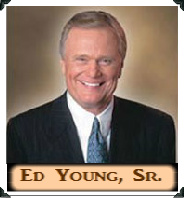
The video is below and you’ve probably realized the church in question is Second Baptist Church in Houston, TX where Dr. Ed Young, Sr. is the senior pastor. Now the sermon I’ve spoken of was done by Gary Thomas, whom I mentioned previously e.g. in Mark Driscoll And Contemplative Idolatry, which also gives you futher illustration concerning how far CSM has slithered into the whole of the church visible.
If you didn’t know, Thomas’ bio informs us:
Gary Thomas is a bestselling author and international speaker whose ministry brings people closer to Christ and closer to others. He unites the study of Scripture, church history, and the Christian classics to foster spiritual growth and deeper relationships within the Christian community. (Online source, emphasis mine)We’ll return to those so-called “Christian classics,” but for now, in addition to his international ministry, we find out that Dr. Ed Young, Sr. announced that Gary Thomas had “joined the staff of Second Baptist Church as writer in residence and a member of the preaching team” this past October:

(Online source)
So let’s keep in mind as we go on that Thomas was well known within evangelical circles prior to joining the preaching staff at Young, Sr.’s huge SBC megachurch Second Baptist Church (2ndBC). In fact, Young. Sr. himself was very familiar with the work of Gary Thomas:
“If Gary Thomas writes a book, you need to read it. It’s as simple as that. He has incredible insight into spiritual truths and is able to make those truths graspable for all audiences. In Pure Pleasure Gary reminds us it is OK for Christians to feel good—even have fun! A refreshing message at the right time for contemporary believers. You are going to enjoy this book.”My concern here is the propensity of Gary Thomas to push the spurious CSM mentioned above so I’m going to focus upon the evidence documenting his teaching; another time we’ll talk further about CSM itself, and its crown jewel Contemplative/Centering Prayer, which is itself a form of meditation in an altered state of consciousness. Let me focus your attention upon Thomas’ book Sacred Pathways (SP); this book forms the basis of his sermon below.
—Dr. Ed Young, Second Baptist Church, Houston, Texas (Online source, emphasis his)
From my personal copy of SP I can tell you that Thomas shares with his readers a form of “mantra meditation,” which is traced to Dom (father) John Main (1926-1982). It’s important to note that Main was an apostate Roman Catholic priest and monk of the Order of Saint Benedict (OSB). He’s also universally known by those in the so-called “contemplative tradition” as the man who rediscovered “the practice of pure prayer, or Christian meditation.”
Not upon Scripure mind you; no, this is using a “holy phrase” also known as a mantra in order to enter into an altered state of consciousness. Chapter 9 of Thomas’ SP happens to be a veritable ode of praise for sola Scriptura-repudiating contemplative mystics, some of which you’ll hear in his sermon below. Thomas dreams the following mythology about mystics telling us they:
simply want to bathe in the ocean of love God has for his children, while the rest of us seem unfortunately content to experience that love drop by drop.[1]Thomas then continues on with his romanticizing of mystics as he tells us about the “Acts of Contemplatives,” which he calls “many forms of prayer and activities that contemplatives can make use of in addition to general contemplative prayer.” Next Thomas goes through “The Jesus Prayer,” “Secret Acts of Devotion,” “Dancing Prayer,” “Centering Prayer” (it’s the same as Contemplative Prayer), “Prayer of the Heart,” “Stations of the Cross,” and finally “Meditative Prayer.” You’ll also see mystics refer to this as “the silence” and/or “wordless prayer”[2]; but, the truth is, it’s nowhere taught in Scripture.
Under that section Meditative Prayer Thomas goes into a short spiel about Ignatius of Loyola, the founder of the Jesuits, the militantly pro-Roman Catholic Church mystic group who on orders of the Pope functioned very much like a spiritual Counter Reformation Gestapo Unit during the Protestant Reformation; you may have heard of the Inquisition. Thomas though tells that “The Spiritual Exercises, [of Ignatius of Loyola] helped make mental prayer more popular.”[3]; and this mental prayer Thomas is speaking of here is CCP.
You should know that CCP was never practiced or taught by Jesus; nor was it practiced or taught by His Apostles, but rather, it orginated with 4th century desert hermits in Egypt. All of this romancing of mystics sounds quite pious; however, in reality it’s a classic case of seeking individual, personal, experience with God, which by nature is highly subjective. Frankly, the prolonged practice of CSM does serve to bring the practioner into ignoring the Protestant Reformation.
As an example I’ll show you now that in the Free Resources section of Thomas’ website we find those Christian classics mentioned earlier under Classic Christian Authors:
You’ll see Thomas is already sowing confusion because Francis De Sales (1567-1622) was “Bishop of Geneva, [and] Doctor of the Universal [Roman Catholic] Church”[4], Nicholas Herman aka Brother Lawrence (1605-1691) was a Roman Catholic priest “in the Carmelite order mean[ing] his spiritual practices were derived from or heavily influenced by Teresa of Avila”[5], and François de Salignac de la Mothe-Fénelon (1651-1715) was a “celebrated French [Roman Catholic] bishop.”[6]
(Online source)
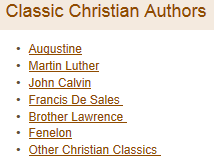
Each of those men died as slaves serving the false gospel of the apostate Roman Catholic Church; the same organization that placed its anathema upon the very Gospel of repentance and forgiveness of sins, salvation by God’s grace alone, through faith alone, in the finished work of Christ alone on the Cross. With all due respect, under what authority does Gary Thomas now come along and reverse the Reformation to pronounce such as these Christians?
Does Dr. Ed Young, Sr., twice president of the SBC—reputed to be the largest Protestant denomination in the United States—also hold this same view? The Other Christian Classics contains a host of other Counter Reformation, and counter sola Scriptura, Roman Catholic mystical works including The Cloud of Unknowing, which Thomas says is “considered a classic of mystical spirituality,” and Experiencing The Depths Of Jesus Christ by Madame Guyon, who was even considered heretical by Rome.
In closing this out, for now, we also find Dark Night Of The Soul by John of the Cross, who was a disciple of the aforementioned emotionally troubled Carmelite nun Teresa of Avila. As I showed you before in my In Touch Magazine Of Charles Stanley Promoting Contemplative New Monasticism Dr. Gary Gilley is right as he explains:
The phrase “dark night of the soul” has become, on a popular level, the description of a period of deep depression or dryness, but this is certainly not what St. John meant…Yet Thomas tells us this apostate Roman Catholic monk is, “One of my favorite authors, John wrote with an unparalleled passion for God.” I wonder, is this also what Dr. Young believes? Keep in mind that the Protestant Reformers, contemporary with Avila and her disciple, rejected their mystic musings; but now we’re to believe that they were in error because people like Gary Thomas hundreds of years after the fact know more than they did?
Classical mysticism is composed of three parts: purgation, in which the senses and spirit are purged of all desires; illumination, in which God supernaturally floods the soul with His love while the individual remains passive; and union, in which the soul is united with God in perfection.
Such an individual will be able to skip purgatory since purgatory’s work has been completed in this life (pp. 107-108, 174). To this pursuit the medieval monks and hermits devoted their lives.
The mystical way is nowhere supported by Scripture, even though St. John makes many attempts to do so… (Online source)
From years of studying mysticism I can tell you that people who persist in CSM eventually end up with a delusion that somehow the Reformation is over. However, if you’d actually make the time to read, and to check the sources within for yourself, you’ll find the answer is absolutely not to the following question: Has The Roman Catholic Church Really Changed?
Finally, consider the following from Thomas’ latest book Thirsting for God: Spiritual Refreshment for the Sacred Journey (T4G):
I sought guidance for devoting myself to becoming close to God,… I opened a book that was written 1500 years ago, an Eastern Christian classic by John Climacus called The Ladder of Divine Ascent. I felt as if something that had atrophied inside me was suddenly being nursed to life.Thomas is “spiritual soul mates” with Roman Catholics advancing a different gospel during the Protestant Reformation? Sounding not a little like EC icon Rob Bell or Living Spiritual Teacher and EC guru Brian McLaren in T4G we see Thomas tell us:
I soon found myself meeting new friends, spiritual soul mates who were on the same search, like John of the Cross and Teresa of Avila, who joined forces in the sixteenth century to bring renewal to a stale religious order.[7]
So many of our theological discussions today highlight issues upon which we profoundly and often vehemently disagree. But as I met these writers throughout church history, I soon witnessed a beautiful tapestry of common truth that gave stunning witness to the accepted faith of the wider church…[8]Does Gary Thomas not realize the “theological discussions” of the Protestant Reformation involved the Gospel itself? If we don’t share that “common truth” then we have no basis for Christian koinonia i.e. fellowship. Yet you’ll see below that Thomas is in the midst of teaching his revisionist history to the congregation of 2ndBC, one the biggest churches in the entire SBC.
Thomas tells us:
I would like to introduce you to some precious Christian brothers and sisters who have walked this life before us… The men and women who wrote the Christian classics were masters at understanding the spiritual life…Herein we reach the heart of the matter; I’ve shown you irrefutable evidence that Thomas includes a bevy of Roman Catholics among the authors of these “Christian classics.” Then he refers to them as “precious Christian brothers and sisters” whom he tells us were “masters at understanding the spiritual life” and “taught basic Christian spirituality.” Ask yourself: How could a master of Christian spirituality end up preaching a false soteriology and then devote themselves to a church that cursed God’s Gospel?
We may not accept every single doctrine they teach,…[but t]hey taught basic Christian spirituality.[9]
As a former Roman Catholic, I say until next time remember, it is still written:
I am astonished that you are so quickly deserting him who called you in the grace of Christ and are turning to a different gospel—not that there is another one, but there are some who trouble you and want to distort the gospel of Christ.________________________________________________________________________
But even if we or an angel from heaven should preach to you a gospel contrary to the one we preached to you, let him be accursed.
As we have said before, so now I say again: If anyone is preaching to you a gospel contrary to the one you received, let him be accursed. (Galatians 1:6-9)
End Notes:
[1] Gary Thomas, Sacred Pathways [Grand Rapids: Zondervan, 2000], 182.
[2] Ibid., 182-189.
[3] Ibid., 189.
[4] http://www.newadvent.org/cathen/06220a.htm, accessed 7/14/11.
[5] http://www.lighthousetrailsresearch.com/brotherlawrence.htm, accessed 7/14/11.
[6] http://www.newadvent.org/cathen/06035a.htm, accessed 7/14/11.
[7] Gary Thomas, Thirsting for God: Spiritual Refreshment for the Sacred Journey [Eugene: Harvest House, 2011], 12.
[8] Ibid.
[9] Ibid., 12, 14.
See also:
PROMOTING CONTEMPLATIVE SPIRITUALITY/MYSTICISM OK IN SOUTHERN BAPTIST CONVENTION
SOUTHERN BAPTIST SOUL SHAPING RETURN TO RELIGIOUS BONDAGE
DISCIPLINES TO DECEPTION IN SOUTHERN BAPTIST CONVENTION
RICK WARREN, SADDLEBACK CHURCH, AND SPIRITUAL DISCIPLINES
JOHN PIPER, RICK WARREN & FOSTER-WILLARDISM
SADDLEBACK CHURCH OF RICK WARREN USING ROB BELL TEACHINGS
CONTEMPLATIVE SPIRITUALITY/MYSTICISM PRODUCES A FALSE SENSE OF REALITY
source: http://apprising.org/2011/07/14/dr-ed-young-promoting-contemplative-spiritualitymysticism-for-his-southern-baptists/
Saturday, July 16, 2011
His Word His Way: THE REALITY OF REAL DISCIPLESHIP (PART 1)
His Word His Way: THE REALITY OF REAL DISCIPLESHIP (PART 1): "THE REALITY OF REAL DISCIPLESHIP (Part 1) Matt. 10:24-33; Selected Scriptures Saiko Woods, Pastor-Teacher 1. Real disciples recognize..."
Wednesday, July 13, 2011
Read the Gospels: JC is not PC (John MacArthur)

I'm talking, of course, about the Jesus we encounter in Scripture, not the always-gentle, never-stern, über-lenient coloring-book character who exists only in the popular imagination. The real Jesus was no domesticated clergyman with a starched collar and genteel manners; he was a bold, uncompromising Prophet who regularly challenged the canons of political correctness.
Consider the account of Jesus' public ministry given in the New Testament. The first word of his first sermon was "Repent!"--a theme that was no more welcome and no less strident-sounding than it is today. The first act of his public ministry touched off a small riot. He made a whip of cords and chased money-changers and animal merchants off the Temple grounds. That initiated a three-year-long conflict with society's most distinguished religious leaders. They ultimately handed him over to Roman authorities for crucifixion while crowds of lay people cheered them on.
Jesus was pointedly, deliberately, and dogmatically counter-cultural in almost every way. No wonder the religious and academic aristocracy of his generation were so hostile to him.
Would Jesus receive a warmer welcome from world religious leaders, the media elite, or the political gentry today? Anyone who has seriously considered the New Testament knows very well that he would not. Our culture is devoted to pluralism and tolerance; contemptuous of all absolute or exclusive truth-claims; convinced that self-love is the greatest love of all; satisfied that most people are fundamentally good; and desperately wanting to believe that each of us is endowed with a spark of divinity.
Against such a culture Jesus' message strikes every discordant note.
Check the biblical record. Jesus' words were full of hard demands and stern warnings. He said, "If anyone desires to come after Me, let him deny himself, and take up his cross daily, and follow Me. For whoever desires to save his life will lose it, but whoever loses his life for My sake will save it. For what profit is it to a man if he gains the whole world, and is himself destroyed or lost?" (Luke 9:23-25). "If anyone comes to Me and does not hate his father and mother, wife and children, brothers and sisters, yes, and his own life also, he cannot be My disciple" (Luke 14:26).
At one point an unthinkable Roman atrocity took the lives of many Galilean pilgrims who had come to worship in Jerusalem. Pilate, the Roman governor, ordered his men to murder some worshipers and then mingled their blood with the sacrifices they were offering. While the city was still reeling from that awful disaster, a tower fell in the nearby district of Siloam and instantly snuffed out eighteen more lives.
Asked about these back-to-back tragedies, Jesus said, "Do you suppose that these Galileans were worse sinners than all other Galileans, because they suffered such things? I tell you, no; but unless you repent you will all likewise perish. Or those eighteen on whom the tower in Siloam fell and killed them, do you think that they were worse sinners than all other men who dwelt in Jerusalem? I tell you, no; but unless you repent you will all likewise perish" (Luke 13:2-5).
Ignoring the normal rules of taste, tact, and diplomacy, Jesus in effect declared that all his listeners were sinners in need of redemption. Then, as now, that message was virtually guaranteed to offend many--perhaps most--of Jesus' audience.
Those with no sense of personal guilt--including the vast majority of religious leaders--were of course immediately offended. They were convinced they were good enough to merit God's favor. Who was this man to summon them to repentance? They turned away in angry unbelief.
The only ones not offended were those who already sensed their guilt and were crushed under the weight of its burden. Unhindered by indignation or self-righteousness, they could hear the hope implicit in Jesus' words. For them, the repeated phrase "unless you repent" pointed the way to redemption.
© Copyright 2009 by John MacArthur. All rights reserved.
Subscribe to:
Posts (Atom)