Monday, June 21, 2010

Confirmation of Jesus' Messiahship

Confirmation of Jesus' Messiahship ~ Bible Prophecy Today


THURSDAY, FEBRUARY 18, 2010


Confirmation of Jesus' Messiahship

Doug BookmanBy Doug Bookman
Bookman Ministries


When Paul arrived at Thessalonica on his second missionary journey, he spent three Sabbaths in the synagogue, developing a two-point sermon. The first point was pure exegesis. According to the divinely superintended notes of Dr. Luke, the apostle Paul alleged from the Scriptures “that [the] Christ must needs have suffered, and risen again from the dead” (Acts 17:3). (The Greek includes the definite article.)


To this point, the name Jesus of Nazareth had not entered the sermon. The Greek word for “Christ” was used here as a generic title. It is the Greek counterpart of the Hebrew term for “Messiah,” an important title of the Deliverer for whom Israel had been taught to wait for so many centuries (Ps. 2:2; Dan. 9:25–26). Paul’s argument here was preliminary: He contended that, according to the portrait drawn centuries earlier by God in the Scriptures, the Messiah — whoever He was — must suffer and die and rise again. Then, in his second and culminating point, the apostle argued from the drama that had recently unfolded in Judea: “This Jesus, whom I preach unto you, is [the] Christ” (Acts 17:3).


Paul’s polemic strategy was simple and basic. Long before Jesus of Nazareth was born, God “spoke . . . unto the fathers by the prophets” (Heb. 1:1). A recurring focus of that earlier revelation was the Messiah-Deliverer who was to come. Not only was He promised, He also was described in significant detail. The intent of that prophetic portrait clearly was that men might know Him when He arrived. Thus, when Jesus came claiming to be Messiah, men were able to test and confirm that claim by comparing Him to the picture the Hebrew Scriptures so carefully etched of the promised Redeemer.


Many people today deny the possibility of such a “theology of fulfillment.” They insist that the Old Testament is not sufficiently clear or specific to support the argument the apostle Paul made in Thessalonica. To be sure, the New Testament record proves otherwise. Appeal was made to a “theology of fulfillment” often and effectively — by Paul (not only in Thessalonica but also in Salamis, cf.Acts 13:32–33), by the resurrected Lord on the road to Emmaus (Lk. 24:25–27), by Stephen in his defense before a murderous throng (Acts 6—7), and by Peter in Caesarea (Acts 10:43), to cite but a few. But a further point begs to be made concerning not just the possibility but the absolute necessity of using specific, prophetic details of the coming Messiah to argue the validity of Jesus’ Messianic claims.


A Twofold Dilemma


It is a little appreciated fact that Jesus’ claim to be the Messiah of Israel was exceptionally difficult to believe for at least two reasons.


His Deity. The first (and more legitimate) reason relates to the fact that, throughout the first two and a half years of His ministry, Jesus made two startling claims concerning Himself. He declared Himself to be not only Israel’s Christ but also Israel’s God, come in the flesh (cf. Mt. 16:15–17; 26:63; Lk. 4:41; Jn. 6:69; 11:27; 20:31). Today’s world has had two millennia to get used to the concept of God becoming man. But it is worthwhile to ponder what it would have been like to have been confronted with that claim by the man Jesus of Nazareth. It is hard to appreciate how incredibly difficult it must have been to accept such an assertion, especially for Jewish people.


His Death. The second reason Jesus’ claim of Messianic identity must have been difficult to accept is that the portrait of Messiah drawn in the Hebrew Scriptures included a mystery. The apostle Peter said the prophets themselves pondered “what, or what manner of time the Spirit of Christ who was in them did signify [was indicating] when he testified beforehand the sufferings of Christ, and the glory that should follow” (1 Pet. 1:11). In other words, how could Messiah, when He came, both suffer and reign?


That mystery, of course, is no longer a mystery because believers today understand that Messiah was to come twice: first to suffer and then, at a subsequent coming, to reign. But the concept of two comings, though not foreign to the Old Testament, certainly is not revealed clearly there, and for good reason. Messiah’s Second Coming was necessitated by the fact that He was rejected at His First Coming (Jn. 1:11).


That rejection did not take God by surprise. Indeed, the prophets anticipated it (Isa. 53:1; cf. Jn. 12:37–38). But Christ’s rejection — and the consequent necessity of two Messianic comings — could not be revealed clearly, or the people to whom Jesus came could have convinced themselves that they had a legitimate excuse for rejecting and scorning Him. (Note, for instance, Caiaphas’ attempt to appeal to the prophesied suffering of “one man” as an excuse for executing Jesus [Jn. 11:49–50].)


The mystery Peter articulated produced a dilemma with regard to Jesus’ Messianic claims. Much rabbinic discussion has focused on exactly how to interpret these two seemingly contradictory lines of prophetic truth. But again, the New Testament record is clear: Whatever the rationale, the generation to whom Jesus appeared had jettisoned the notion of a suffering Messiah and had fixed its hope entirely and exclusively on a conquering Warrior-Messiah who would bring to a dramatic end the “times of the Gentiles” (Lk. 21:24). They “yearned for the promised deliverer of the house of David, who would free them from the yoke of the hated foreign usurper, would put an end to the impious Roman rule, and would establish His own reign of peace and justice in its place.”


That this selectively diminished Messianic ideal was embraced not only by those who rejected Jesus but by His closest followers as well is demonstrated by the apostles’ reaction when Jesus first spoke explicitly about His imminent suffering (Mt. 16:21–22). By insisting that He was going to die, as well as in many other particulars, “Jesus was so unlike what all Jews expected the Son of David to be that His own disciples found it almost impossible to connect the idea of the Messiah with Him.” To a people cherishing an exclusively political-military hope, ever more feverishly anxious to throw off the yoke of Gentile dominion, Jesus came and offered Himself as Messiah. He led no army; He posed no obvious threat to the Roman Empire; and He called His people not to rebellion but to repentance. In short, His claim to be Messiah was as disappointing as His claim to be God was unbelievable.


The Twofold Solution


How did God arrange to convince men that Jesus’ claims concerning Himself were true? The divine strategy was basically twofold. First, Jesus performed miracles that demonstrated He was a genuine spokesman for God, verifying that His message was true — including His claims concerning His own person and work. This method was always and ever the divine means of authenticating a man’s claim to be a messenger of Yahweh (cf. Ex. 4:1–9; 1 Sam. 12:14–18; Heb. 2:3–4). Such miracles were certainly strategic in establishing the bona fides of Jesus (Jn. 3:1–2; Mk. 2:1–12; Acts 2:22).


But miracles alone were not enough (cf. Dt. 13:1-5). Even more basic was the requirement that every spokesman for God be consistent in word and deed with all God had revealed so far (Isa. 8:20; Gal. 1:8–9). Because Jesus claimed to be the Messiah, it was incumbent on those who heard Him to determine whether He did indeed fulfill the prophecies concerning the Messiah.


There was much to appeal to in that regard. Messiah’s lineage had been foretold: He was to be of the seed of the woman (Gen. 3:15; cf. Gal. 4:4), of Abraham (Gen. 22:18; cf. Gal. 3:16), of Judah (Gen. 49:10; cf. Heb. 7:14), and then of David (2 Sam. 7:12–13; Ps. 132:11; Jer. 23:5; cf. Acts 13:23). The Deliverer was to be born at a certain time (Dan. 9:24–27) in a designated city (Mic. 5:2; cf. Lk. 2:4–5; Jn. 7:40–43); and His birth was to be preceded by the ministry of a forerunner (Isa. 40:3; Mal. 3:1; cf. Mt. 3:1–3).


His ministry was to commence in Galilee (Isa. 9:1–2; cf. Mt. 4:12–17, 23), but He was also to enter Jerusalem (Zech. 9:9; cf. Mt 21:1–5) where He would possess the Temple (Mal. 3:1; cf. Mk. 11:15–18). The Messiah’s ministry was to be punctuated with miracles (Isa. 35:5–6; cf. Lk. 7:21–22); yet He would be despised (Isa. 49:7; cf. Jn. 7:48; 15:25), rejected by the nation’s rulers (Ps. 118:22; cf.Mt. 21:42), betrayed by someone close to Him (Ps. 41:9; 55:12–13; cf. Jn. 13:18–22), and abandoned for 30 pieces of silver (Zech. 11:13; cf. Mt. 26:15).


He would be smitten on the cheek (Mic. 5:1; cf. Mt. 27:30), spat on (Isa. 50:6; cf. Mt. 27:30), mocked (Ps. 22:7–8; cf. Mt. 27:31, 39–44), and scourged (Isa. 50:6; cf. Mt. 27:26–30). His hands and feet were to be pierced (Ps. 22:16; Zech. 12:10; cf. Jn. 19:18, 37; 20:25), yet none of His bones would be broken (Ps. 34:20; cf. Jn. 19:33–36). His body was to be buried with the wealthy (Isa. 53:9; cf.Mt. 27:57–60) but was to remain uncorrupted (Ps. 16:10; cf. Acts 2:31) because, shortly after dying, He would rise miraculously from the grave (Ps. 2:7; 16:10; cf. Acts 13:33).


This is but a partial catalog. However, it begins to make the point that a scholar once summarized as follows:
The Messianic prophecies extend over a thousand years. They are interspersed throughout all the books of the Old Testament. They are found in the books of Moses, the oldest writer, and in the prophecy of Malachi, the last of the prophets. They are numerous; if all were to be collected from the sacred writings, and if the secondary and typical prophecies were to be included, it would be found to be no exaggeration to affirm that the Old Testament was pervaded with the Messianic idea. They are varied; they relate to minute particulars as well as to great events; some of them are seemingly contradictory; some represent the Messiah as a mighty king and others speak of Him as a man of sorrows. . . . But all these prophecies, when examined, will be found to have received their fulfillment in the person of Jesus of Nazareth, and not one will be discovered that is inconsistent with the history of His life.
It was such a body of prophesied details that the Spirit of God used to confirm Jesus’ claims and, thus, to convince men of the truth that Jesus of Nazareth “is indeed the Christ, the Savior of the world” (Jn. 4:42).


Related Links

Why Did the Messiah Have to Die? - Ariel Ministries (Arnold Fruchtenbaum)
The Life and Times of Jesus the Messiah: New Updated Edition - Alfred Edersheim
Is Isaiah 53 'The Suffering Servant' a prophecy about Jesus? - GotQuestions.org
The Claims of Christ - Chuck Smith (Book)
Prophecies of the Messiah in the Hebrew Bible - Jews for Jesus


Read more:
http://www.bible-prophecy-today.com/2010/02/confirmation-of-jesus-messiahship.html#ixzz0rVlY5VM8

Wednesday, June 16, 2010

Mere Christianity


I've recently accepted a summer reading/listening challenge to discuss C.S. Lewis' book Mere Christianity. I've only started to listen to the audiobook, which suits my busy summer much more than reading at this time.

I found you can download a FREE mp3 copy of Mere Christianity here. You should be able to right click & save.  If that fails go to main page which is here. Save to your iPod or CD & listen, pause, rewind anywhere/any time.

You can buy a cheap paperback on Amazon.

C.S. Lewis, a former Atheist, does a brilliant job of explaining in clear & concise analogies the world, and specifically the Christian faith.

Monday, May 3, 2010

Learning the Language of the Lord

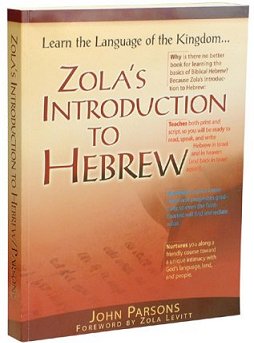
With the aid of the book Zola's Introduction to Hebrew I am enjoying learning the Language of the Kingdom. Book by John Parsons (www.hebrew4christians.com). I learned 2 interesting things today regarding vowel sounds, which do not exist in the original Hebrew.


The book explains that some say the reason the Lord did not provide consonants is so that the reader would be 'supplying the intonation and "exhale" the words that the Lord has so graciously inspired.'


The people of Israel were to be always IN the word of God, they  always read the Holy Scriptures and therefore learned how every word from God was to be read and intoned. So much so that the unpronounceable name of God (יהוה) written by the Hebrew letters (read from right to left) yod, hey, vav, hey (YHWH). It is today unknown, though in modern days we say Yahweh (observant Jews say Adonai); however, it is truly pronounceable since after the diaspora the Hebrews no longer remembered how to say a name which they were never allowed to vocalize. 


We are living in prophetic times, let us commit to stay IN the word of God and rejoice (not fear) at the fulfillment of the prophecies being revealed.


Ezekiel 12:25
"For I the LORD will speak, and whatever word I speak will be performed It will no longer be delayed, for in your days, O rebellious house, I will speak the word and perform it," declares the Lord GOD.'"

Wednesday, April 28, 2010

Purgatory: Purifying Fire or Fatal Fable ~ Bible Prophecy Today


Purgatory: Purifying Fire or Fatal Fable

Mike GendronBy Mike Gendron
Proclaiming the Gospel Ministries

Catholics who believe a purifying fire will purge away their sins are deluded victims of a fatal fabrication. The invention of a place for purification of sins called Purgatory is one of the most seductive attractions of the Roman Catholic religion. Pastor John MacArthur of Grace Community Church described this deceptive hoax brilliantly. He said:
"Purgatory is what makes the whole system work. Take out Purgatory and it's a hard sell to be a Catholic. Purgatory is the safety net, when you die, you don't go to hell. You go [to Purgatory] and get things sorted out and finally get to heaven if you've been a good Catholic. In the Catholic system you can never know you're going to heaven. You just keep trying and trying...in a long journey toward perfection. Well, it's pretty discouraging. People in that system are guilt-ridden, fear-ridden and have no knowledge of whether or not they're going to get into the Kingdom. If there's no Purgatory, there's no safety net to catch me and give me some opportunity to get into heaven. It's a second chance, it's another chance after death" (from "The Pope and the Papacy").

The Origin of Purgatory

There was no mention of Purgatory during the first two centuries of the church. However, when Roman Emperor Theodosius (379-395) decreed that Christianity was to be the official religion of the empire, thousands of pagans flooded into the Church and brought their pagan beliefs and traditions with them. One of those ancient pagan beliefs was a place of purification where souls went to make satisfaction for their sins.

The concept became much more widespread around 600 A.D. due to the fanaticism of Pope Gregory the Great. He developed the doctrine through visions and revelations of a Purgatorial fire. According to the Catholic Encyclopedia (CE), Pope Gregory said Catholics "will expiate their faults by purgatorial flames," and "the pain [is] more intolerable than any one can suffer in this life." Centuries later, at the Council of Florence (1431), it was pronounced an infallible dogma. It was later reaffirmed by the Council of Trent (1564). The dogma is based largely on Catholic tradition from extra-biblical writings and oral history.
"So deep was this belief ingrained in our common humanity that it was accepted by the Jews, and in at least a shadowy way by the pagans, long before the coming of Christianity" (CE).
It seems incomprehensible that Rome would admit to using a pagan tradition for the defense of one of its most esteemed "Christian" doctrines.

The Deception of Purgatory

Purgatory comes from the Latin word “purgare,” which means to make clean or to purify. The Catholic Encyclopedia defines purgatory as "a place or condition of temporal punishment for those who, departing this life in God’s grace, are not entirely free from venial faults, or have not fully paid the satisfaction due to their transgressions." They must be purified of these "venial" sins before they can be allowed into heaven. Here we see Catholicism perpetuating the seductive lie of Satan by declaring "you will not surely die" when you commit venial sins (Gen. 3:4).

The Council of Trent dares to declare that "God does not always remit the whole punishment due to sin together with the guilt. God requires satisfaction and will punish sin...The sinner, failing to do penance in this life, may be punished in another world, and so not be cast off eternally from God." (Session 15, Can. XI).

Those Catholic Bishops had the audacity to declare that the suffering and death of God's perfect man and man's perfect substitute was not sufficient to satisfy divine justice for sin.

The Motivation for Purgatory

Over the centuries billions of dollars have been paid to Roman Catholic priests to obtain relief from imaginary sufferings in Purgatory's fire. The Catholic clergy has always taught that the period of suffering in Purgatory can be shortened by purchasing indulgences and novenas, buying Mass cards and providing gifts of money. When a Catholic dies, money is extracted from mourning loved ones to shorten the deceased's punishment in Purgatory.

When my dear old dad passed away as a devout Catholic of 79 years, I was amazed at the hundreds of Mass cards purchased for him by well-meaning friends. We have heard of other Catholics who have willed their entire estates to their religion so that perpetual masses could be offered for them after they die. It is no wonder that the Catholic religion has become the richest institution in the world. The buying and selling of God's grace has been a very lucrative business for the Vatican.

Another motivation for Rome to fabricate the heretical doctrine of Purgatory is its powerful effect on controlling people. Ultimately, the enslavement and subjugation of people is the goal of every false religion, and Purgatory does exactly that. The concept of a terrifying prison with a purging fire, governed by religious leaders, is a most brilliant invention. It holds people captive, not only in this life but also in the next life. Catholic clergy will not say how many years people have to suffer for their sins or how many Masses must be purchased before they can be released from the flames. This dreadful fear and uncertainty is the most ruthless form of religious bondage and deception!

Biblical Support for Purgatory

There is absolutely none! In fact, neither the word nor the concept of sin-purifying fire is found in Scripture. The Vatican was confronted with this in the 16th century when the Reformers protested its practice of buying and selling of God's grace through indulgences. Backed into a corner, the Council of Trent added the apocryphal books to its canon of Scripture. Rome now declares there is scriptural support for purgatory in the apocryphal book of Second Maccabees. The council ignored the fact that the Jewish scribes never recognized the apocryphal books as inspired or part of the Hebrew Scriptures. They were never included because of their many historical, theological and geographical errors. Since God is not the author of error, He obviously did not inspire the writers of the Apocrypha. This is why the Apocrypha was never included in the original canon of 66 books.

The apocryphal verses Rome uses to defend its doctrine of Purgatory refer to Jewish soldiers who died wearing pagan amulets around their necks. Judas Maccabees "sent twelve thousand drachmas of silver to Jerusalem for sacrifice to be offered for the sins of the dead...Judas hoped that these men who died fighting for the cause of God and religion, might find mercy: either because they might be excused from mortal sin by ignorance; or might have repented of their sin, at least at their death. It is therefore a holy and wholesome thought to pray for the dead, that they may be loosed from sins" (2 Maccabees 12:43-46).

Rome argues that since Judas Maccabees prayed for the dead, there must be hope for those who die in sin. This of course, goes directly against God's Word which declares,
"It is appointed for men to die once and after this comes judgment" (Heb. 9:22).
Rome's attempt to give credence to Purgatory by using this ungodly practice of the Jews, who had a history of disobeying God, is pathetic.

In another attempt to find support for Purgatory, many Catholics point to this verse:
"If any man’s work is burned up, he will suffer loss; but he himself will be saved, yet so as through fire" (1 Cor. 3:15).
Clearly, the context of this verse is the testing of a man's works by fire. The works that survive are the ones done for the glory of Christ and are called gold, silver and precious stones (Eph. 2:10). All the other superfluous works are burned in fire and are called wood, hay and stubble. It is not man's sins that are being purged, it is man's spurious works that are being burned and destroyed.

The Biblical Rebuke of Purgatory

God's Word leaves absolutely no possibility for sin to be purged away by anything other than the blood of Jesus Christ. The beloved apostle John penned these words with irrefutable clarity. He wrote,
"The blood of Jesus His Son cleanses us from all sin" and "all unrighteousness" (1 John 1:7, 9).
John did not say "some" sins or "most" sins, but all sin! This soundly rebukes the need for a sin-purging fire. God's Word also declares, "All things are cleansed with blood, and without shedding of blood there is no forgiveness" (Heb. 9:22). When Jesus "made purification of sins, He sat down at the right hand of the Majesty on high" (Heb. 1:3). Those who desire to have their sins purged need to trust a person, not a place. The blood of Christ is the only cleansing agent for sin! Those who come to the cross of Christ must come with empty hands of faith, bringing nothing but their sins.

Every blood-bought believer is instantly present with their Redeemer at the moment of death. To be "absent from the body" is to be "at home with the Lord" (2 Cor. 5:6-8). This good news was affirmed by the Lord Jesus with the promise He gave to the repentant thief at Calvary. He said to him, "Truly I say to you, today you shall be with Me in Paradise" (Luke 23:43). This habitual sinner did not need a fire to purge his sins.

Catholics who believe in Purgatory need to be asked: "Who is in charge of releasing souls from the purging fire?" It cannot be God because of His promise to believers.
"Their sins and iniquities I will remember no more" (Heb. 10:17).
After conversion, God no longer counts sins against His children (2 Cor. 5:19).

Purgatory is a travesty on the justice of God and a disgraceful fabrication that robs Christ Jesus of His glory and honor. He alone satisfied divine justice, once and for all, by the perfect and finished sacrifice of Himself. The fatal deception of Purgatory blinds Catholics from the glorious Gospel of grace. It is one of Satan's many lies which keep his captives from knowing and trusting the sufficiency of Jesus Christ. It is Christ alone that will present us "faultless before the presence of his glory" (Jude 24).


Related Links

 Why Did the Messiah Have to Die? - Ariel Ministries (Arnold Fruchtenbaum)
 The Apocrypha - Let Us Reason Ministries
 The Pope and the Papacy - Grace to You (John MacArthur)
 What does the Bible say about Purgatory? - GotQuestions.org
 Preparing Catholics for Eternity - Mike Gendron (Book)


Read more: http://www.bible-prophecy-today.com/2010/04/purgatory-purifying-fire-or-fatal-fable.html#ixzz0mROHZRYK

Tip #1: Securing Stitches While Not Knitting


TIP #1:

I NEVER lose any more stitches on my knitting needles (DPNs shown below), which can tend to slide off in your knitting bag left untethered. 
TIP: align needles together so they all lay side by side & wind yarn a couple of times around the needles one side of your work, pull yarn to other side and wrap a couple of times. Twist the last wrap once (like a backwards "e") for a secure hold. 
alt text
Works like a charm and no need to pry the stitch holder out of my dog’s mouth ;o)

Saturday, April 24, 2010

Tuesday, April 20, 2010

Avoid This Observance! ~ Bible Prophecy Today

Avoid This Observance! ~ Bible Prophecy Today

Avoid This Observance!

Jan MarkellBy Jan Markell
Olive Tree Ministries

What kind of theology could attract a half-billion people from 180 countries? Nearly every school in North America will observe this day. Churches will emphasize it all week. Some of you will probably bow out of the hoopla April 22, but tens of millions won't. They insist on bowing down to "Mother Earth" on Earth Day.

Sen. Gaylord Nelson got this launched forty years ago, and you would think with that kind of long history, more would have figured out that church participation in the event is an outrage. In keeping with the tide of the 1960s, he first called it a "National Environmental Teach-In."

All movements and campaigns have their own "bible." For the Earth Day crowd the 1970 book The Environmental Handbook, is their guide. The book states that each tree and stream has its own guardian spirit. And Christianity is hugely at fault for environmental woes. They think we believe that it is God's will to exploit nature (p. 20-21). Thanks to Christianity, we will see a worsening ecological crisis (p. 25). The book also says, "No technical solution can rescue us from the misery of overpopulation. Freedom to breed will bring ruin to all. The only way we can preserve more precious freedoms is by relinquishing the freedom to breed." (p.49, Garrett Hardin). That's called population control. Just like the global warming crowd, they want a whole lot of us to go away.

On page 324, the book promotes polygamy and group marriage. It pushes for a "revolution of consciousness" and enlightenment while praising Gnostics, hip Marxists, Teilhard de Chardin Catholics, druids, Taoists, witches, Yogins, Bhikkus, Quakers, Sufis, Tibetans, Zens, Shamans, Bushmen, American Indians, Polynesians, anarchists, and alchemists. (p. 331).

But here's the worst news. Take a look at the sacred earth prayer found in this book:

"Mother, Father, God, Universal Power - remind us daily of the sanctity of all life. Touch our hearts with the glorious oneness of all creation as we strive to respect all the living beings on this planet. Penetrate our souls with the beauty of this earth, as we attune ourselves to the rhythm and flow of the seasons. Awaken our minds with the knowledge to achieve a world in perfect harmony and grant us the wisdom to realize that we can have heaven on earth."
So why are evangelicals lured into this? The direct reference to "Mother Earth," "Heaven on earth," and prayer to a "Universal Power," should be huge red flags that "Earth Day" and some related ecology events are pagan events to be shunned. Instead, we have Web sites representing evangelicals who are promoting this big time. One is "Blessed Earth: Serving God and Saving the Planet." According to the Bible, we are to be good stewards of the Earth, but we cannot save it. Only God can.

The Bible says, "For we know that the whole creation groans and labors with birth pangs" (Romans 8:22) as it waits Earth's real liberation - the return of Christ. I guess we "end-times watchers" continually mess up various agendas, including honoring the cause of the "Blessed Earth."

One Christian ecology site states, "I found God's Holy Spirit is convicting and calling Christians from all over the world to repent for the damage we have done, and to care for God's Earth." The "Blessed Earth" site folks want us to "wake up on Earth Day with a whole new spirit of serving God and saving the planet." But why are Christians being asked to unite with the darkness represented in some of the above-mentioned statements? Aren't we supposed to separate from them?

In the National Association of Evangelicals (NAE) March e-newsletter, the leadership encourages us to participate in the "Blessed Earth" activities, including the "Blessed Earth" live Web cast on April 21.

The Evangelical Environmental Network (EEN) has a wide source of Bible studies based on saving the planet from environmental destruction. I maintain we need Bible studies on saving people from eternal destruction.

Then we have the Green Bible. It boasts that there are twice as many Bible references about Earth as there are about Heaven! I can't make things like this up! It has testimonials by spiritual giants Brian McLaren and Desmond Tutu.

Make no mistake that "Earth Day" does represent a "religion." It is the religion of "Mother Earth". This is not a kind of faith that evangelicals have paid much attention to until the last 15 years.

God cares about the creation and does not want Christians or anyone else abusing it. His care didn't stop after six days. It says in Psalm 104: 5 and 24, that,"You set the earth on its foundations, so that it shall never be shaken - O Lord, how manifold are your works! In wisdom you have made them all; the earth is full of your creatures."

The command that human beings are given to steward or manage the Earth is both a huge privilege and a great responsibility. It carries with it immense power for good or evil.

Creation is something good. It reflects the goodness and character of God. He made it. He loves it. We need to treat it properly. But what I am reading makes "creation care" the number one issue on which some organizations wish us to focus. Nowhere on creation care sites do I read of evangelism programs or how to grow in the faith. I see only the exaltation of the planet and how we must intervene lest it destroy itself, or worse yet, mankind destroys it.

I close with wise words from Berit Kjos:
"I wanted to be part of God's team of Earth stewards who helped take care of His creation. I still do. But finding like-minded team members in our fast-changing culture has become complicated. The beliefs and practices associated with ecology stray far beyond biblical bounds - even in the church. My first exposure to unbiblical environmentalism under the banner of Christianity came in 1990. I had driven to a mainline church some distance from my home to see how God's people would celebrate Earth Day. Watching the worship, I wondered if the Creator Himself would have been welcome. At one point, the members of the youth group stepped forward to present their offerings."

One stated, "I bring to our Mother, the Earth, the gift of a new beginning..."
Kjos concludes,
"The congregation responded to this strange ritual with a standing ovation. Did these people know whom they worshiped? Had environmental concern swung church doors wide open to paganism? Could this really be happening in a supposedly conservative church?"
The pains on the earth stem from the Fall in the Garden. We are waiting for Him to solve the problem of the global curse with His return. In the meantime, let's be the best stewards of the Earth that we can be.


Read more: http://www.bible-prophecy-today.com/2010/04/avoid-this-observance.html?utm_source=feedburner&utm_medium=email&utm_campaign=Feed%3A+BibleProphecyToday+%28Bible+Prophecy+Today%29#ixzz0lgnzSGlX